LACISE Inspires Children and Young People at the Mērsrags Science Festival "Mērsraga Ābols"
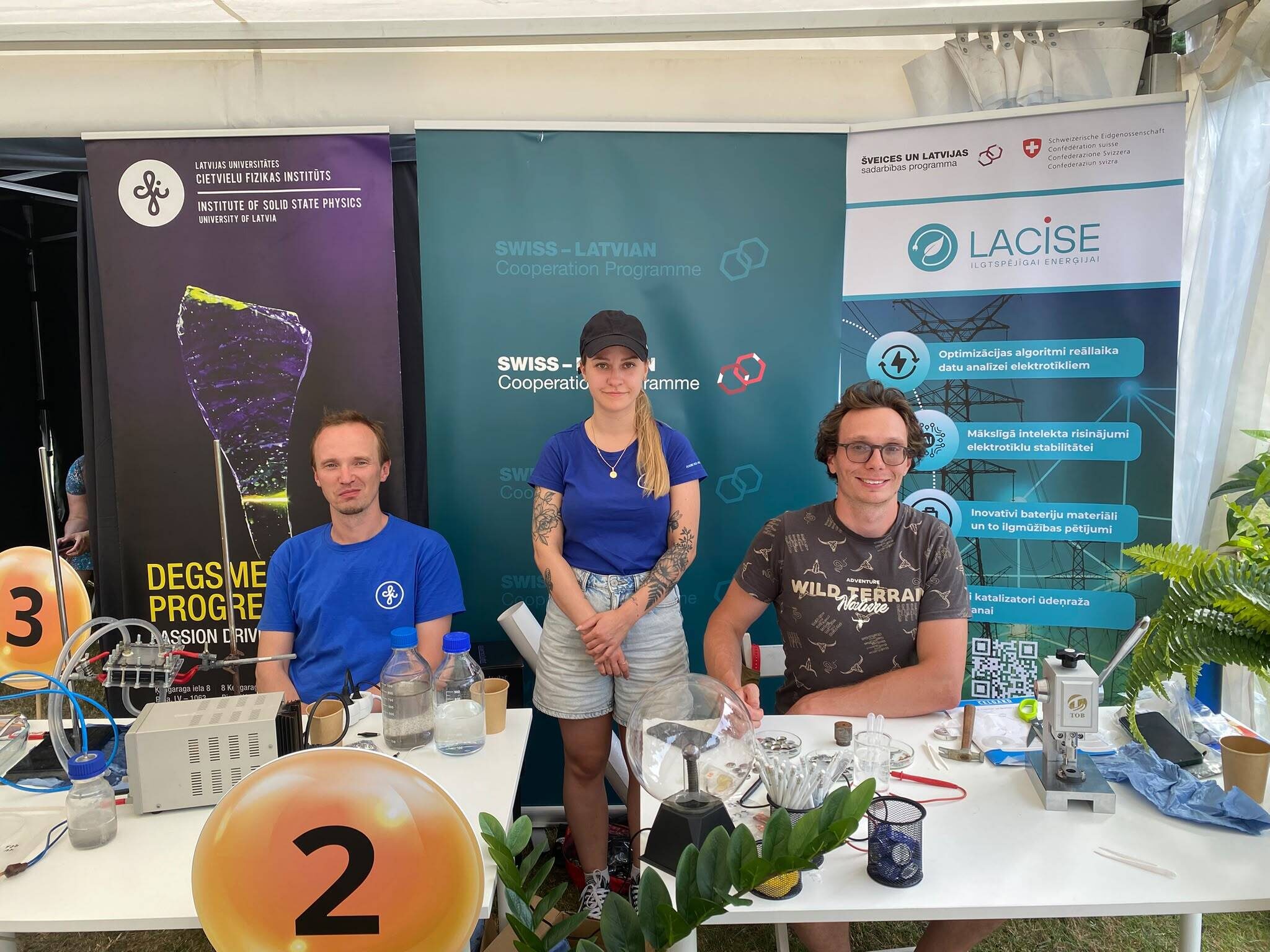
On 15 August, the LACISE team from the Energy Materials Laboratory of the Institute of Solid State Physics, University of Latvia, represented by Ināra Ņesterova, Niks Renārs Smelters and Einārs Sprūģis, took part in the first-ever Mērsrags Science Festival "Mērsraga Ābols". At the Latvian Council of Science's Science Bubble tent, the team invited visitors to explore energy technologies and discover the exciting world of science.
Festival attendees could participate in two interactive LACISE activities that introduced modern energy storage and production technologies through hands-on experience and theoretical learning.
In the activity "Build Your Own Battery", children and young people had the chance to assemble a small working battery with their own hands. Step by step, participants learned the basics of electrochemical processes, discovered how electricity is generated, and gained insight into how batteries store energy. After completing the experiment, the young researchers measured the voltage of the batteries they built.
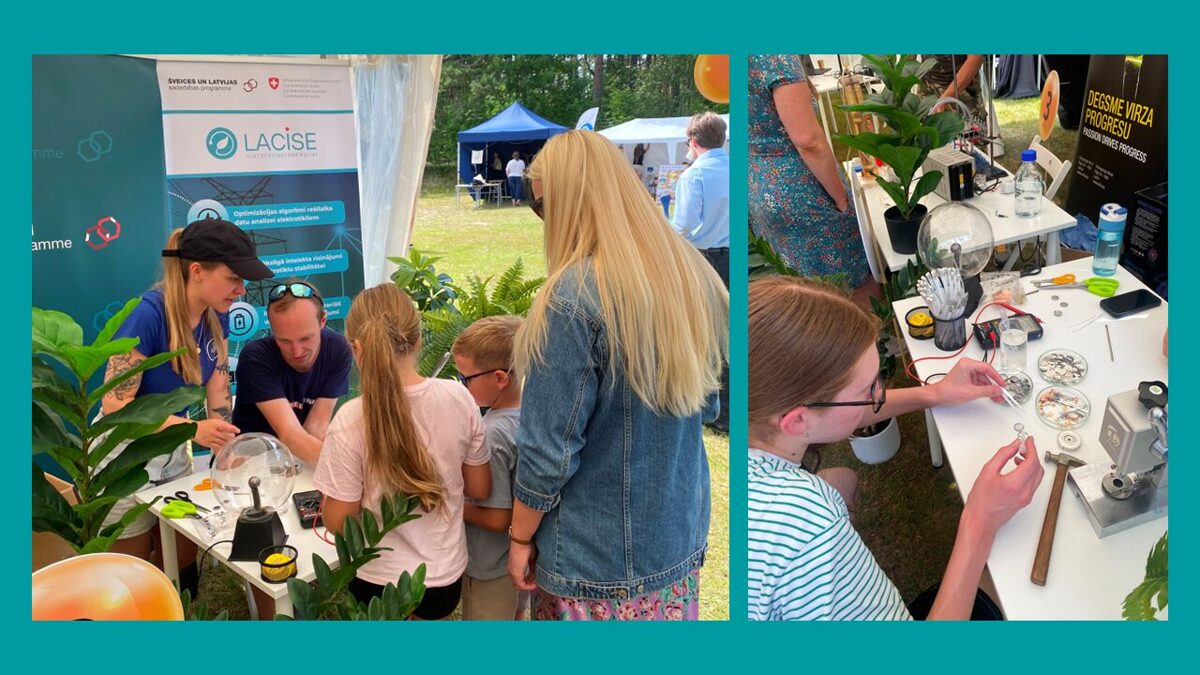 Ināra Ņesterova and Einārs Sprūģis explaining and demonstrating the basic principles of battery operation to festival visitors. Photo: Inese Jansone.
The second activity, "The Magic of Hydrogen", introduced visitors to one of the most promising energy carriers of the future. Through live demonstrations, participants learned about hydrogen's properties, methods for producing it from aluminum-containing waste, and its potential applications in energy generation. The hands-on experiments featuring exploding hydrogen bubbles attracted particular interest and excitement among visitors.
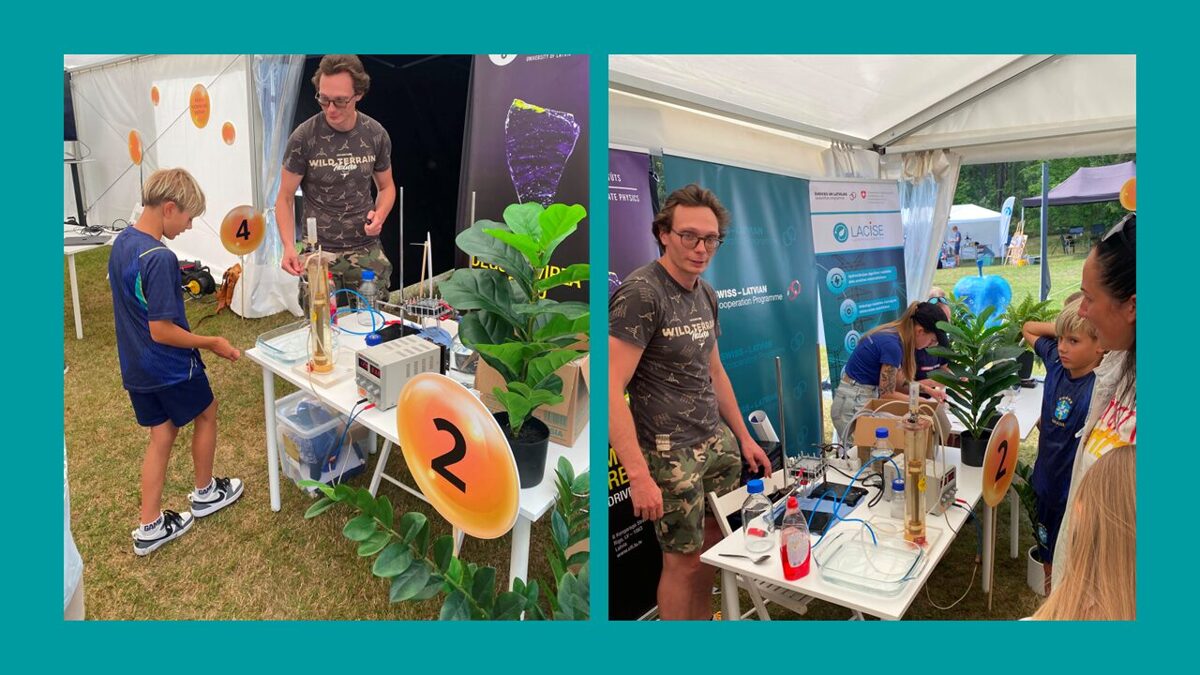 Photo: Niks Smelters demonstrates exploding hydrogen bubbles. Photo: Inese Jansone.
Throughout the festival, the LACISE activities drew the attention of families, children and young people alike. Visitors enthusiastically took part in battery-building experiments and engaged with the researchers by asking questions about energy storage, battery technologies and the future role of hydrogen in the energy sector.
Participation in the Mērsrags Science Festival provided an excellent opportunity to engage audiences beyond the capital city and show that science can be accessible, understandable, and exciting for everyone. Events like these play an important role in sparking children's and young people's interest in science, technology, engineering and mathematics.
The goals of the LACISE project extend beyond generating research results. The project is also actively involved in science communication, education, and promoting STEM fields, helping raise awareness of sustainable energy solutions while inspiring the next generation of scientists, engineers, and innovators.
Our experience in Mērsrags once again confirmed that curiosity, hands-on experiments and opportunities for active participation are among the most effective ways to open the door to science and inspire future researchers.