LACISE Partners Gather in Switzerland to Drive Smart Energy Innovation Forward
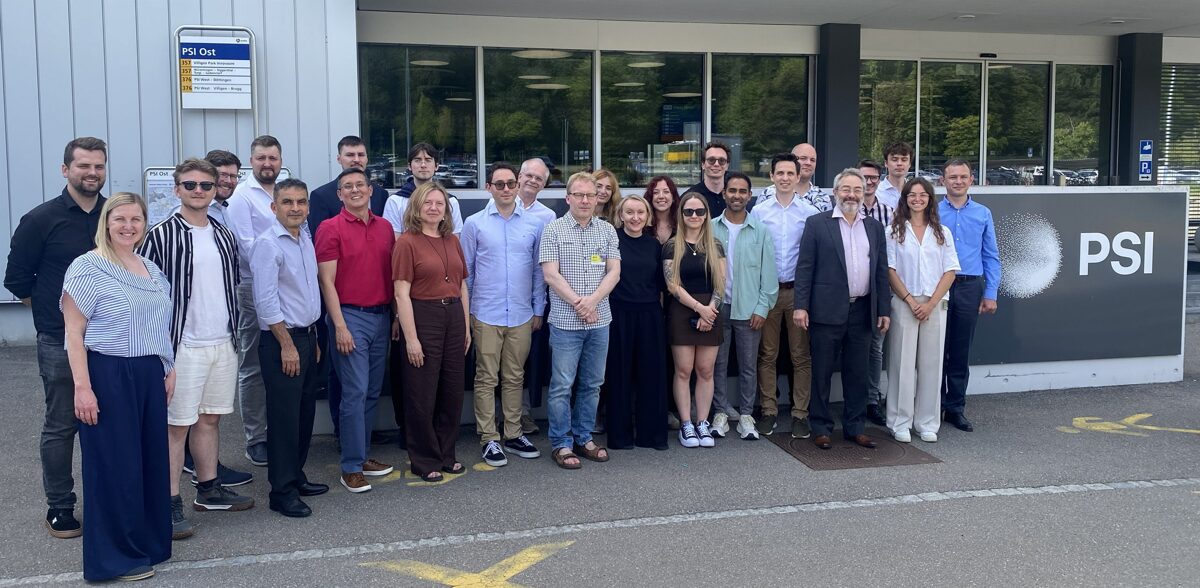 Project team and representatives from SECO at the Paul Scherrer Institute. Photo: Inese Jansone
On 17–18 June 2026, LACISE project partners met at the Paul Scherrer Institute (PSI) in Switzerland for the latest General Assembly. The event brought together researchers, engineers, and institutional representatives from Latvia and Switzerland, marking a significant milestone toward smarter, more resilient energy systems.
Over two days, participants shared progress, exchanged ideas, and coordinated next steps. The meeting highlighted both technical achievements and the strong collaboration central to LACISE.
A Collaborative Effort Across Borders
The meeting gathered representatives from all consortium partners, including:
• Institute of Solid State Physics, University of Latvia (ISSP UL)• Institute of Electronics and Computer Science (IECS)
• Riga Technical University (RTU)
• Zurich University of Applied Sciences (ZHAW)
• Paul Scherrer Institute (PSI)
• Swiss Centre for Electronics and Microtechnology (CSEM)
Representatives from the Swiss State Secretariat for Economic Affairs (SECO) provided valuable insights, connecting the project’s scientific work to the broader goals of the Swiss Contribution programme. They shared reflections on progress and highlighted LACISE as a model of effective cooperation between Switzerland and Latvia.
Beyond institutional collaboration, the project is creating meaningful opportunities for knowledge exchange at the individual level. As Emiliana Fabbri (PSI, WP5) explains:
“Many young researchers can spend short- or long-term visits here in Switzerland, at a well-established research institute. They learn not only new techniques, but also how research groups and institutes operate in practice.” This exchange is already producing tangible results.
“Within LACISE, we are collaborating with colleagues from Latvia to develop new materials. Students visit our group and carry out testing in our laboratories, where they can access facilities that are new to them. We hope this will lead to new materials for green hydrogen production,” she adds.
The strength of the consortium lies in its complementary expertise. As Philippe Dallemagne (CSEM) highlights: “The LACISE consortium brings together partners that complement each other very well — from basic research to technology transfer and industry engagement. At CSEM, we focus on innovation and technology transfer, connecting the research carried out in the project with industrial applications.”
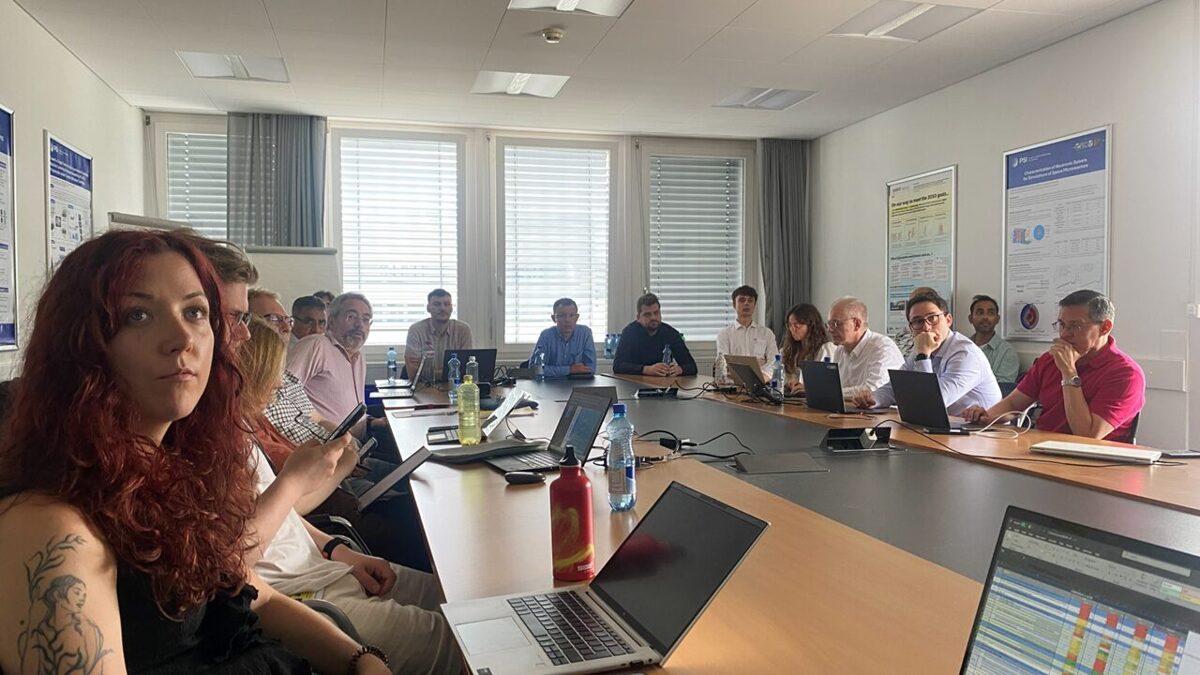 LACISE team and SECO representatives at the Paul Scherrer Institute during the General Assembly of the project. Photo: Inese Jansone.
From Data to Decisions: Smarter Energy Systems
Researchers presented progress in developing and validating models of the Baltic power system using real-world data. Early results highlight the complexity of accurately capturing grid behavior during disturbances, which is essential for improving stability in a renewable energy future.Teams are also building the necessary infrastructure. Advanced laboratories and real-time simulation systems now enable researchers to observe and analyze grid behavior in greater detail. A new event detection system can automatically identify disturbances using live measurement data, reducing manual analysis and enabling faster, smarter responses.
Beyond technical developments, the cooperation plays an important strategic role. As Gints Kučinskis (ISSP UL, LACISE coordinator) emphasizes: “There is a lot we can learn from Switzerland, but I am equally sure that Switzerland can learn from us. Switzerland has strong expertise in energy grid modeling, advanced energy storage solutions, and understanding materials at the nanoscale — down to atomic-level processes.” He adds: “At the same time, Latvia has a rapidly growing number of research teams motivated to apply this knowledge and contribute to a more stable and renewable energy system.”
Bringing Intelligence to Forecasting
Another key area is the development of AI-based tools to enhance forecasting and decision-making in energy systems.
These tools require high-quality data, and LACISE is making significant progress in this area. New low-cost smart weather stations are being tested in real-world conditions, collecting solar irradiance data to improve forecasting models. Deploying these systems is an important step in connecting physical measurements with digital intelligence.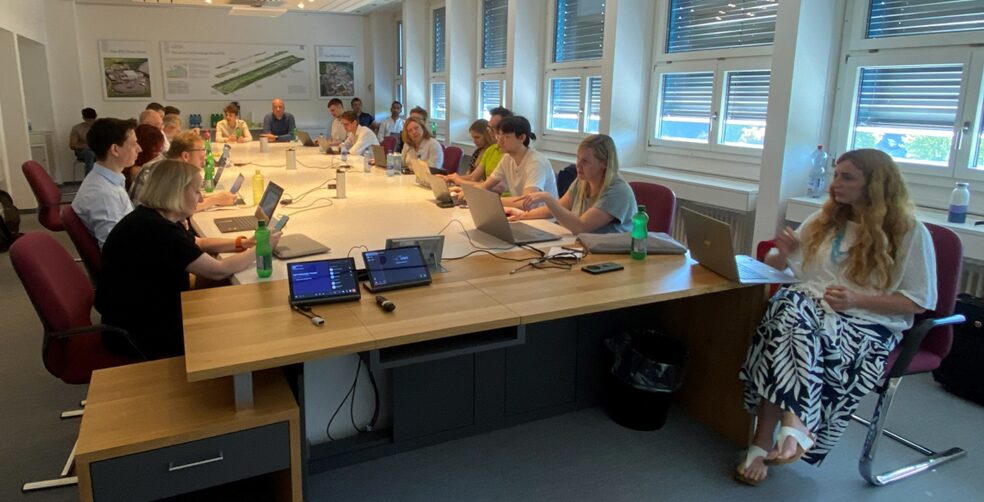 LACISE team listens to the progress reports from the work package representatives. Photo: Inese Jansone
Developing the Technologies of Tomorrow
In addition to digital tools, LACISE is advancing the physical technologies required for the energy transition.
Sustainable Battery Materials
Researchers are developing next-generation battery components that are safer, more sustainable, and less reliant on critical raw materials. Promising results include:
• Cobalt-free cathodes with improved performance• High-stability materials suitable for long-term energy storage
• New approaches to understanding how batteries age and degrade
Green Hydrogen Solutions
In parallel, teams are exploring innovative methods to produce hydrogen, a key energy carrier for the future. Progress is being made in several areas:
• Improved water electrolysis using advanced catalysts• Photo-assisted processes that use light to boost efficiency
• Methods to generate hydrogen from aluminium waste, linking energy production with circular economy principles.
The practical importance of this work is already becoming evident in Latvia. As Andris Šutka (RTU, WP5) explains: “Our hydrogen-related research focuses on water electrolysis, using electricity to split water and produce hydrogen. We are developing materials for devices that could be commercialised, and several industries in Latvia are already interested.” He further highlights the broader impact:
“There is a growing start-up environment working on hydrogen technologies, and companies like Latvenergo are investing in greener energy approaches. We are in constant contact with industry partners. Importantly, this programme also helps attract more students to the field, which. Without this support, it would be much harder to advance our ideas.”
Together, these efforts demonstrate LACISE’s commitment to addressing energy challenges from multiple perspectives, including data, modeling, materials, and real-world applications.
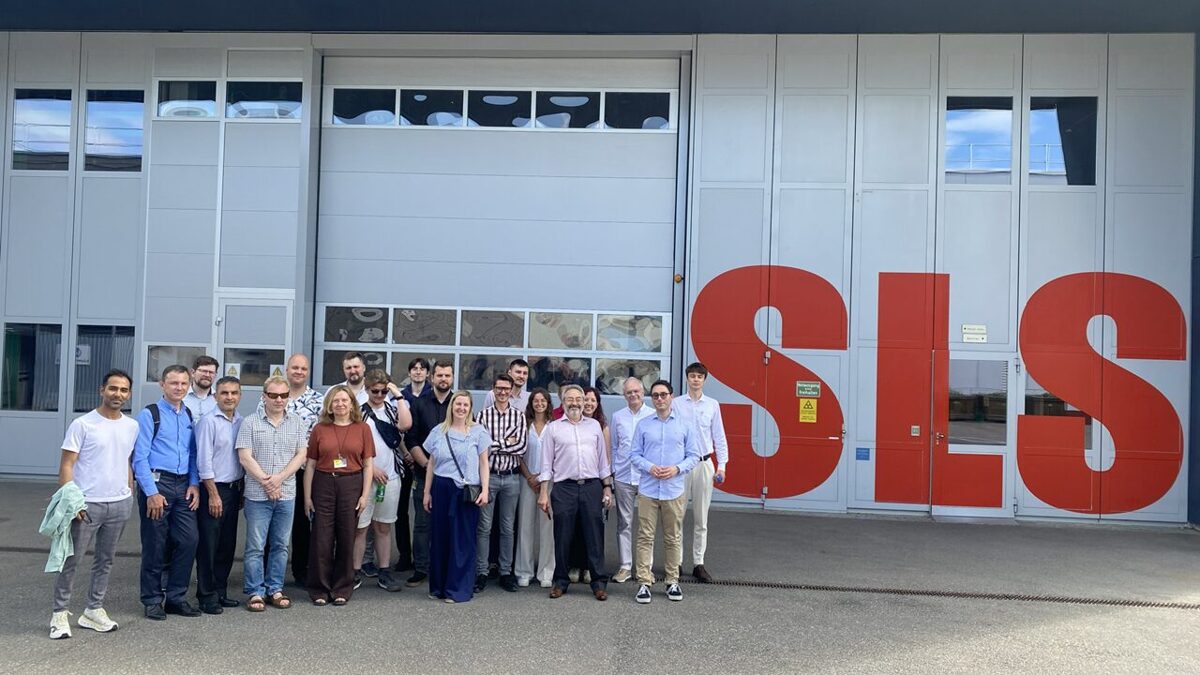 LACISE team is ready for the Swiss Light Source tour. Photo: Inese Jansone
Experiencing World-Class Research Infrastructure
During their visit, project partners and SECO representatives also had the opportunity to tour the Swiss Light Source (SLS), an X-ray synchrotron facility at PSI — one of the leading research infrastructures in Europe.
The visit offered insight into cutting-edge analytical techniques used to study materials at the atomic and molecular level — capabilities that are essential for advancing research in areas such as battery materials and energy technologies. The tour provided valuable context for the experimental work presented during the meeting and highlighted the importance of access to world-class infrastructure in driving innovation.
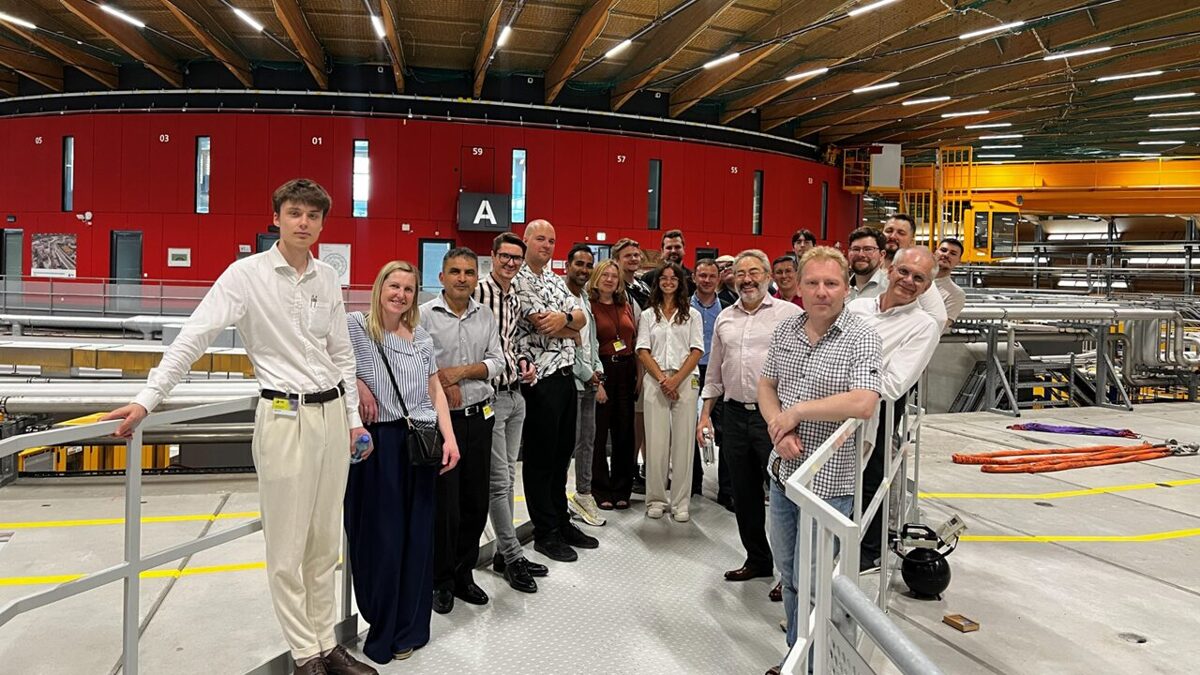 LACISE partners at the SLS. Photo: Nathalie Estievenart
Strategic Context: The Swiss Contribution
The General Assembly also underscored the broader framework supporting the project.LACISE is funded under the Swiss–Latvian Cooperation Programme, part of Switzerland’s second contribution to selected EU Member States. The programme aims to reduce economic and social disparities while strengthening bilateral cooperation.
LACISE embodies this vision by:
• Connecting institutions across countries
• Supporting knowledge exchange and skills development
• Delivering solutions that address shared challenges such as energy security and climate change
Reflection and Forward Look
At the end of the second day, a Stakeholder Advisory Board member representing A/S Latvenergo, Pēteris Lesničenoks, offered an external perspective on the project’s progress. The feedback recognized the strong results to date and encouraged continued focus on real-world applicability and integration.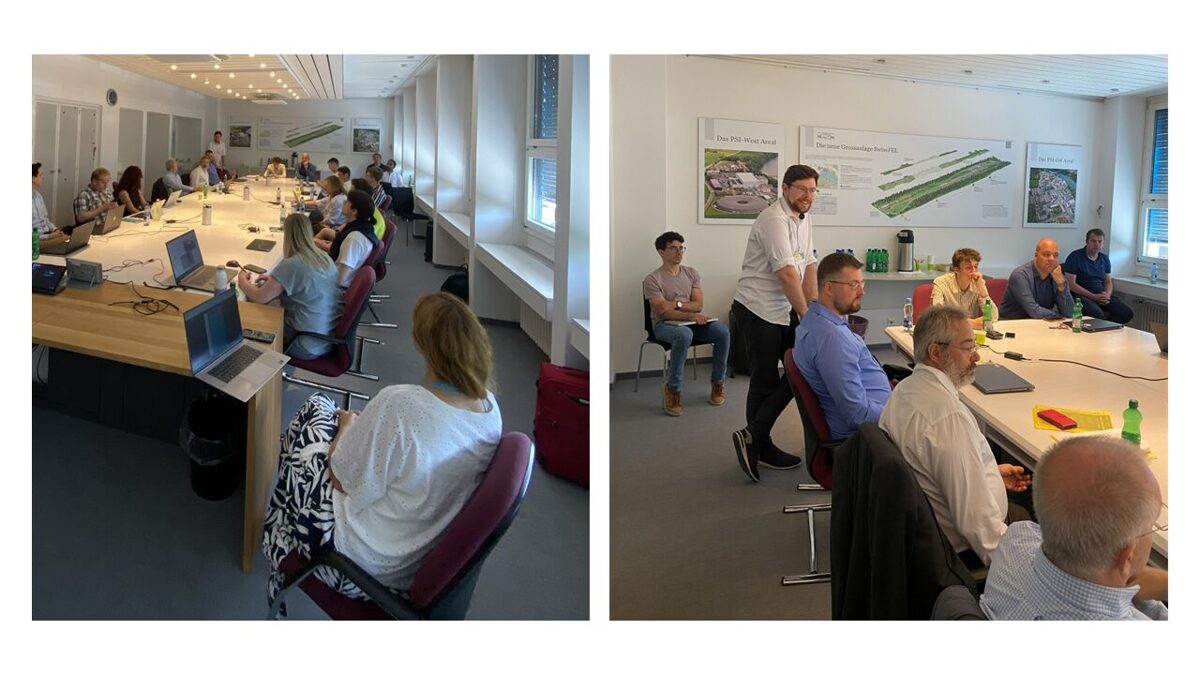 Pēteris Lesničenoks (A/S Latvenergo) representing Stakeholder Advisory Board. Photo: Inese Jansone
The meeting concluded with a clear sense of momentum. While challenges remain, as expected for a project of this scope, the progress presented in Switzerland confirmed that LACISE is steadily advancing toward its goals.
By combining cutting-edge research, international collaboration, and a strong strategic framework, LACISE is helping to create a future where energy systems are more efficient, resilient, and sustainable.
Acknowledgements
The consortium extends its sincere gratitude to Sigita Trabesinger (Laboratory for Battery Science, PSI) and Emiliana Fabbri (Laboratory for Electrochemistry, PSI) for their excellent organisation of the General Assembly and for hosting the partners at the Paul Scherrer Institute.
We also warmly thank the SECO representatives – Nicolas Guigas and Nathalie Estievenart for their presence, engagement, and continued interest in the project's progress.
From data to devices and from laboratories to real-world impact, LACISE continues to show how collaboration can transform complex challenges into shared progress.