From Zurich to Riga: Swiss–Latvian Cooperation Drives LACISE Innovation
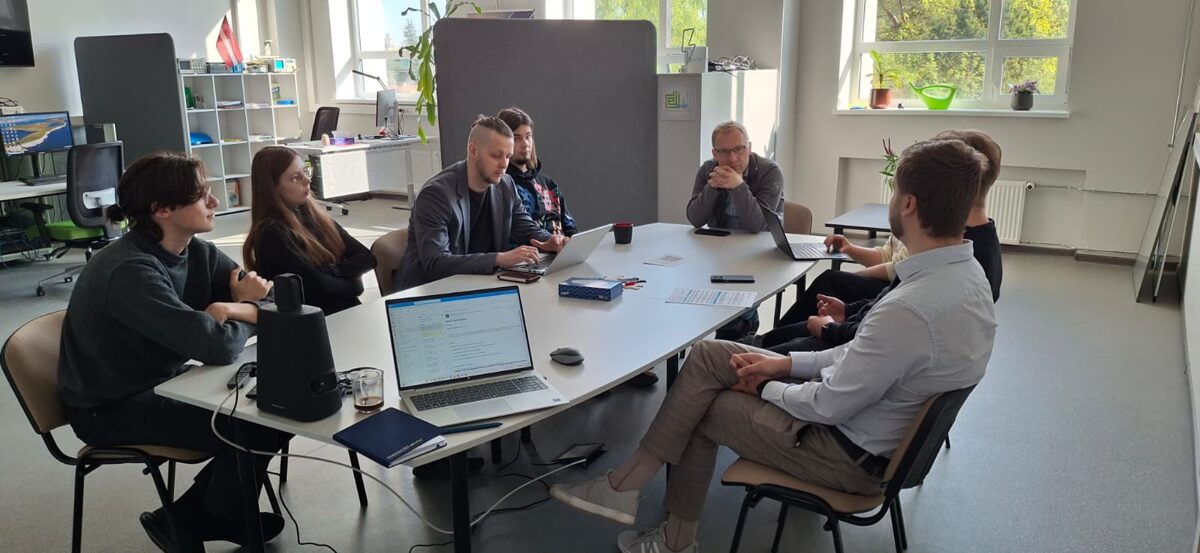 Prof. Dr. Petr Korba meeting IECS partners of the LACISE project. Photo: IECS.
When spring arrived in Riga, LACISE’s work took on a distinctly international rhythm. On May 14, the Institute of Electronics and Computer Science (IECS) welcomed Prof. Dr. Petr Korba from Zurich University of Applied Sciences (ZHAW) for a day of focused exchange and hands‑on collaboration as part of the LACISE project.
The visit began in IECS’s labs and meeting rooms, where researchers and students presented the project’s second-year progress. Conversations ranged from bachelor’s and master’s thesis developments to larger research directions: power‑system modelling, renewable integration, and short‑term forecasting methods. IECS showcased the first prototype of a fault‑registration algorithm that uses frequency-fluctuation data from phasor measurement units; Prof. Korba offered practical recommendations to strengthen the prototype, bringing it closer to an automated tool that can detect faults and help trace their causes — a step toward smarter, more resilient grids.
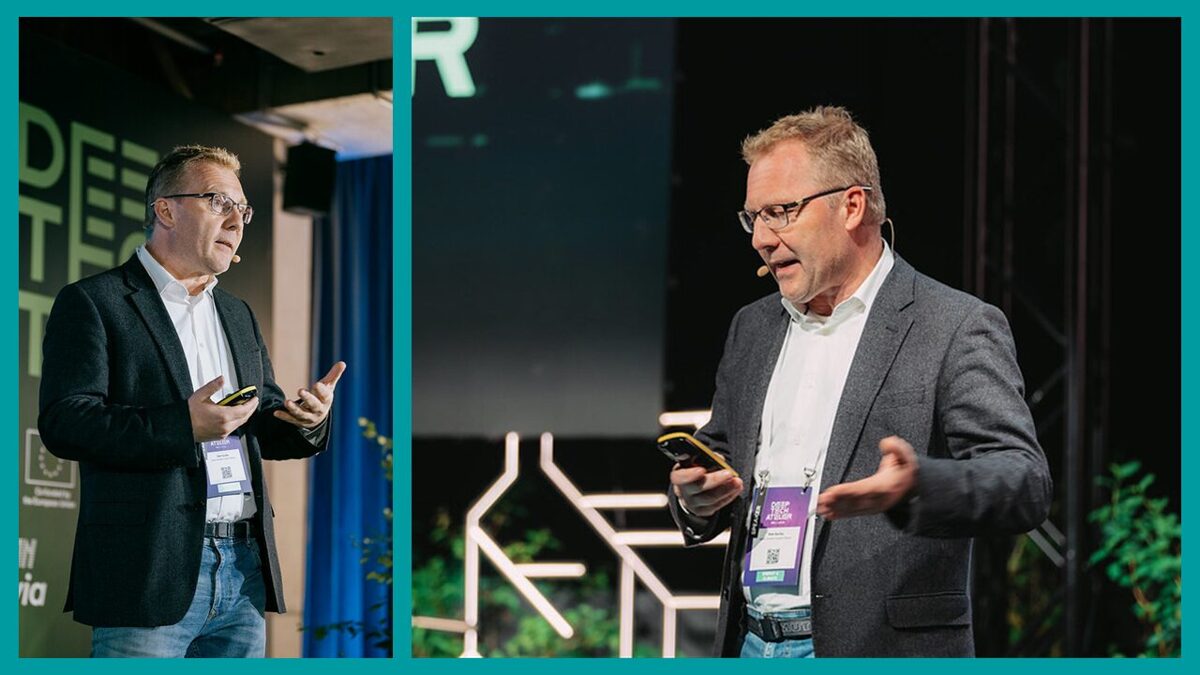 Prof. Dr. Petr Korba (ZHAW) at the Deep Tech Atelier 2026 conference in Riga. Photo: Deep Tech Atelier.
The next day, at the Deep Tech Atelier conference, Korba brought those technical insights to a broader audience. His keynote, “Strategic Grid Resilience in a Dual‑Use World: How Europe’s Renewable Transition Shapes Civilian and Defence Readiness,” framed the renewable transition as a matter of both societal resilience and defence preparedness. He discussed how digitalization, frequency stability, and real‑time monitoring underpin continuity of supply, protection of critical infrastructure, and responses to hybrid threats and cyber‑physical risks, arguing that stronger civilian grids directly reinforce Europe’s defence capabilities.
He was also a presenter in the workshop “Data‑driven monitoring and control of electrical power systems – challenges & experience,” where he explored how PMUs, PDCs, high‑frequency data streams, and modern analytics enable deeper visibility, faster situational awareness, and adaptive control. Drawing on ZHAW lab implementations and trials with transmission system operators, Korba addressed integration across heterogeneous assets, the scalability of analytics, and the need for trustworthy automation in safety‑critical environments — sharing lessons and best practices to make data‑centric methods operational.
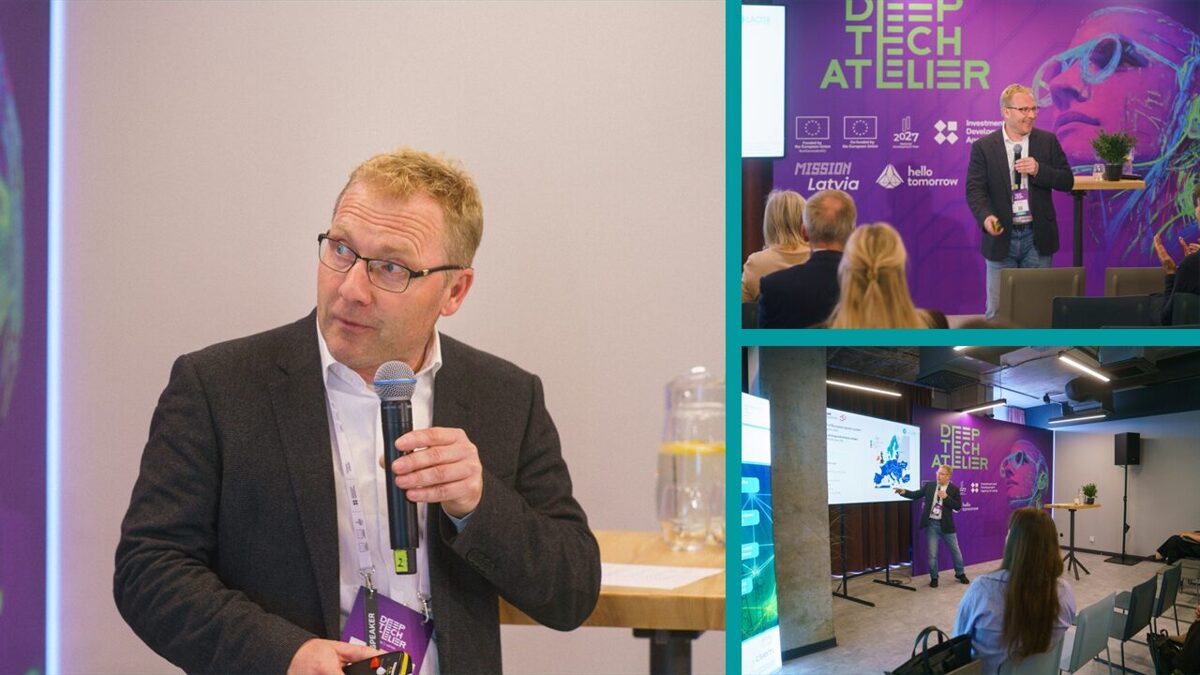 Presenting at the opening of the Swiss-Latvian Smart Energy Digital Centre. Photo: Valdis Jansons.
The visit’s high point came with the inauguration of the Swiss‑Latvian Smart Energy Digital Centre during the Deep Tech Atelier. At the opening, Korba presented his work within the LACISE project. These 2 days in Riga highlighted LACISE’s path from prototype to practice: international collaboration turning research into tools that boost reliability, resilience, and operational efficiency in tomorrow’s power systems.
More about the Deep Tech Atelier conference.
More about the opening of the Swiss-Latvian Smart Energy Competence Centre.