Three Hours in the World of Science: Students Visit the Institute of Solid State Physics, University of Latvia
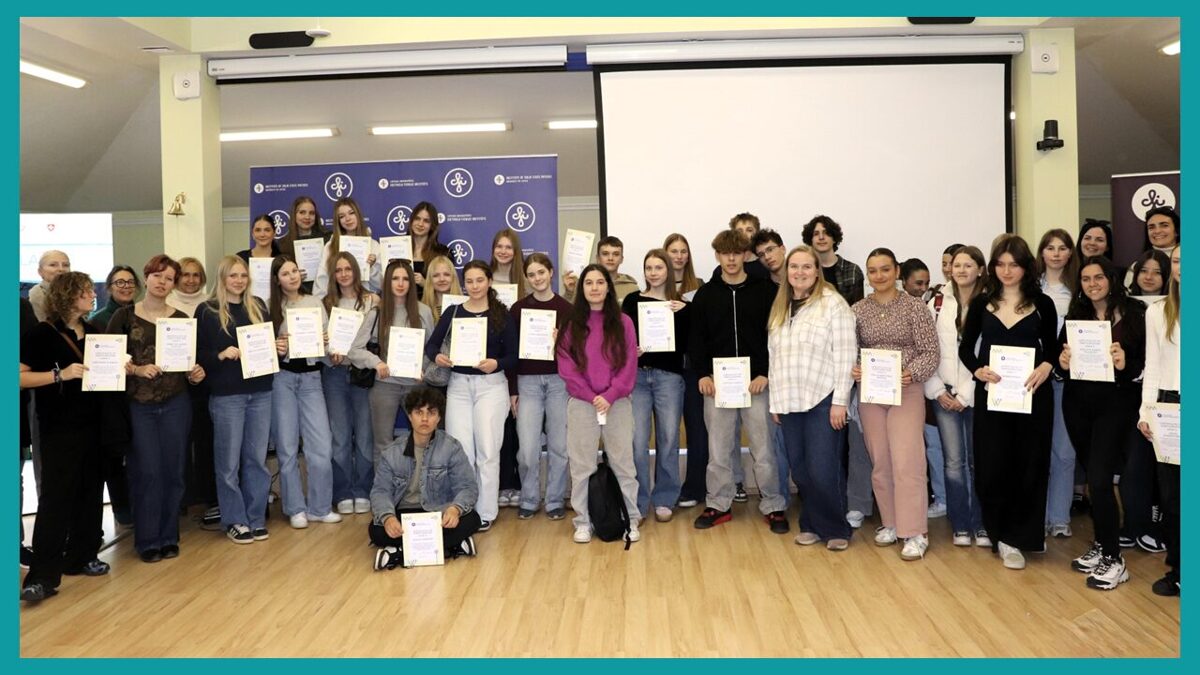 Students from Latvia, Poland, Spain, and France visit the ISSP UL
What does it truly mean to work in science? What does the place look like where ideas for new materials, energy storage solutions and future technologies come to life?
These questions were explored on 24 March by 36 students taking part in the Erasmus+ international mobility programme ECOMATHS. The group included 18 students from Mālpils Secondary School (Latvia) and six students each from IES Ruiz de Alda (Spain), Lycée Albert Camus (France) and XIV Liceum Ogólnokształcące (Poland). During a three-hour visit, the students explored the Institute of Solid State Physics at the University of Latvia (ISSP UL).
Organised within the framework of the LACISE project, the visit gave students an opportunity to experience science beyond the classroom — directly in the environment where research takes place, through laboratory visits, discussions with scientists and hands-on problem-solving activities.
Where real science begins
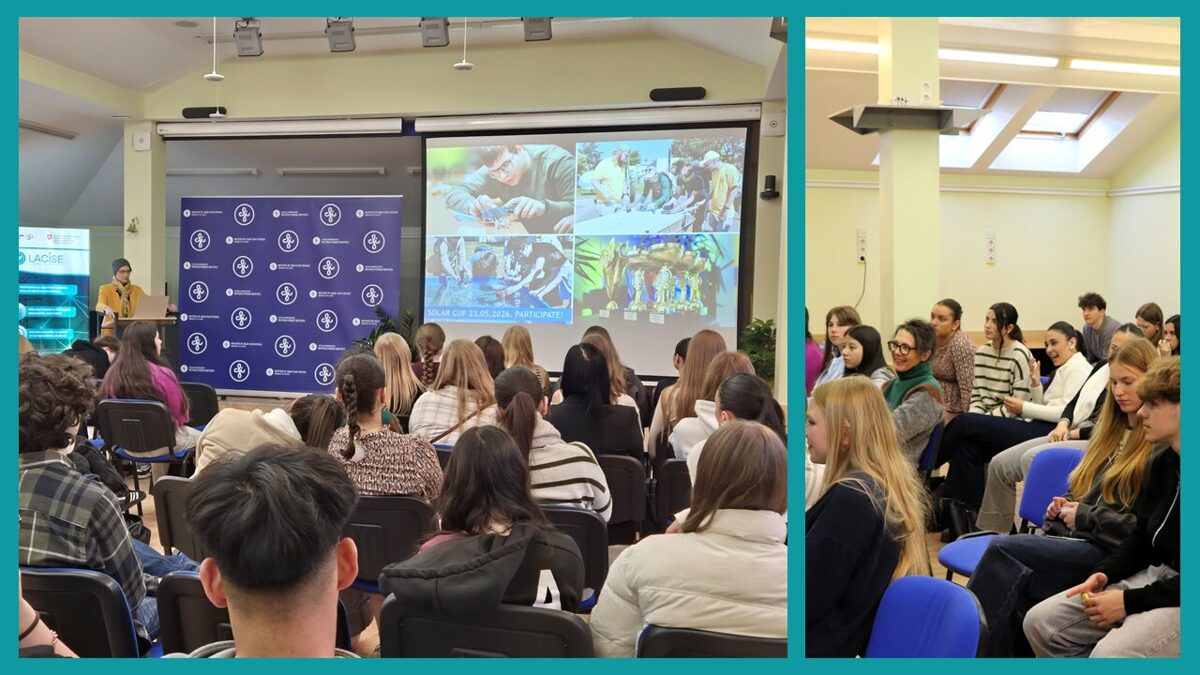 Students get to know the ISSP UL in facts and figures
Following the introduction, the students took part in a guided tour of the Spectroscopy, Micro‑ and Nano‑Devices, and Energy Materials laboratories. There, they gained first-hand insight into how material properties are studied, energy-related processes are analysed, and electrochemical solutions are developed in practice. The visit clearly demonstrated that the equations and formulas learned in physics and chemistry classes do not remain abstract concepts — they turn into measurements, data analysis, and experiments.
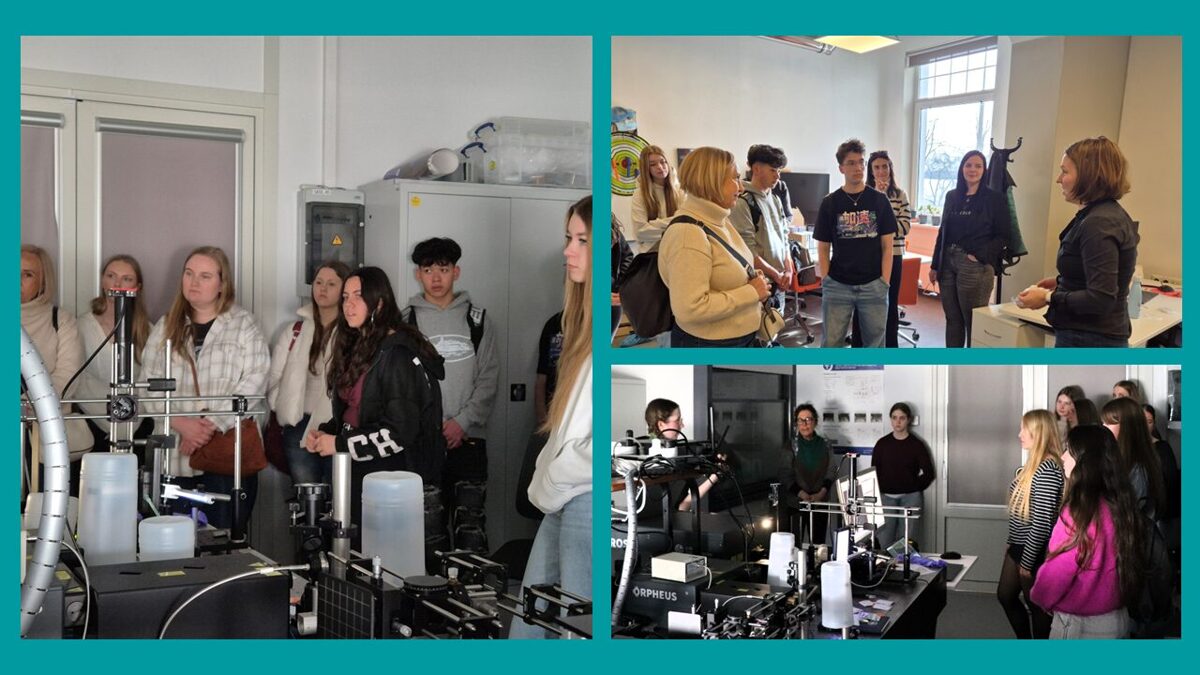 Visiting the Spectroscopy and Micro and Nanodevices Laboratories.
The laboratories and working environment highlighted that science is not about ready-made answers, but about continuously asking questions, testing hypotheses, and refining results through experimentation. Researchers not only presented the laboratory infrastructure and equipment, but also shared their personal experiences of scientific work, research pathways and career development. Many students were particularly impressed by the complexity and value of the equipment, as well as by the level of responsibility required when working in a high‑precision research environment.
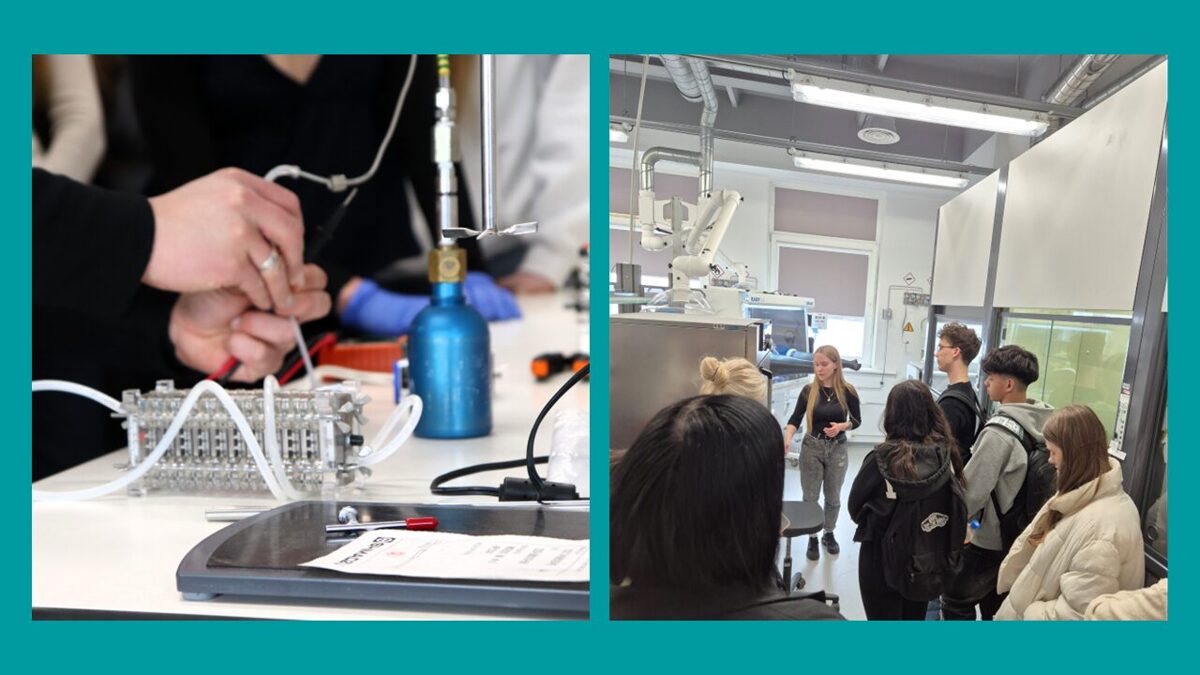 During the excursion, students visit the Energy Materials Laboratory.
Equally important was the way researchers communicated with the students — using accessible language and emphasising not only technical details, but also why this research matters for society, especially in the context of energy technologies and sustainable development. As a result, students gained a deeper understanding of the precision, patience, and attention to detail required in research, and of how every measurement contributes to reliable scientific outcomes.
Hands-on activities: batteries and hydrogen in action
To build on what they had seen in the laboratories, students also took part in hands-on problem-solving activities closely linked to key LACISE research themes — energy storage and hydrogen technologies.
In one activity, students explored hydrogen as an energy carrier, calculating how much energy can be obtained from a given amount of hydrogen and estimating how long that energy could power, for example, a hydrogen-powered vehicle with a specific power rating. This exercise helped them connect chemical calculations with fundamental concepts such as energy, power, and operating time.
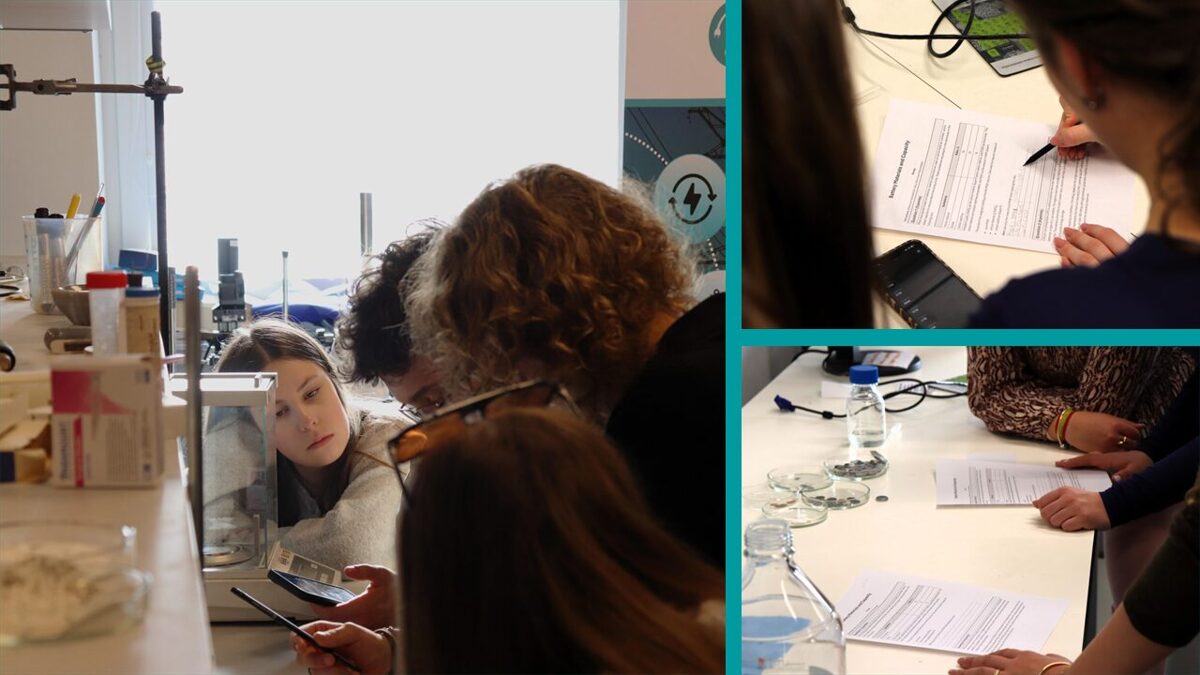 Student groups solve tasks prepared by the Energy Materials Laboratory of the ISSP UL
Another task focused on batteries and energy storage systems. Students analysed how long a battery of a certain capacity could supply power to a device with a defined energy demand, and discussed why energy storage plays a crucial role when electricity is produced from variable renewable sources such as solar or wind. Through these examples, students gained a clear understanding that batteries and hydrogen are not competing solutions, but complementary technologies within a sustainable energy system.
Alongside the practical activities, informal discussions with researchers from ISSP UL formed an important part of the visit. Students asked questions about study choices, everyday work in research, and career opportunities in different countries. A recurring message was that a career in science is not always a straight path, and that curiosity, motivation, and persistence are just as important as academic performance. These conversations helped make science feel more personal — shaped by people, experiences, and real-life stories rather than abstract concepts alone.
An experience that stays with you
For many students, the three-hour visit to the Institute of Solid State Physics marked their first direct encounter with academic research. The experience helped them see STEM not merely as school subjects, but as a pathway to actively contribute to developing solutions for future challenges.
Within the framework of the LACISE project, visits like this play an important role in presenting science as accessible, relevant, and inspiring. We hope that this day at ISSP UL encouraged students to think more broadly and to approach complex questions with curiosity and confidence rather than hesitation.
We would like to express our sincere thanks to the researchers and laboratory staff of the ISSP UL Laboratory of Energy Materials — Ināra Ņesterova, Niks Smelters, Līga Grīnberga, Anzelms Zukuls, Daniels Jānis Jurjevs, Raitis Siks, Ņikita Griščenko, and Emīls Jerikalovs — for their valuable contribution to the visit and for preparing the student activities.