Ozolnieki Secondary School Girls Discover Science Inside the ISSP UL Laboratories
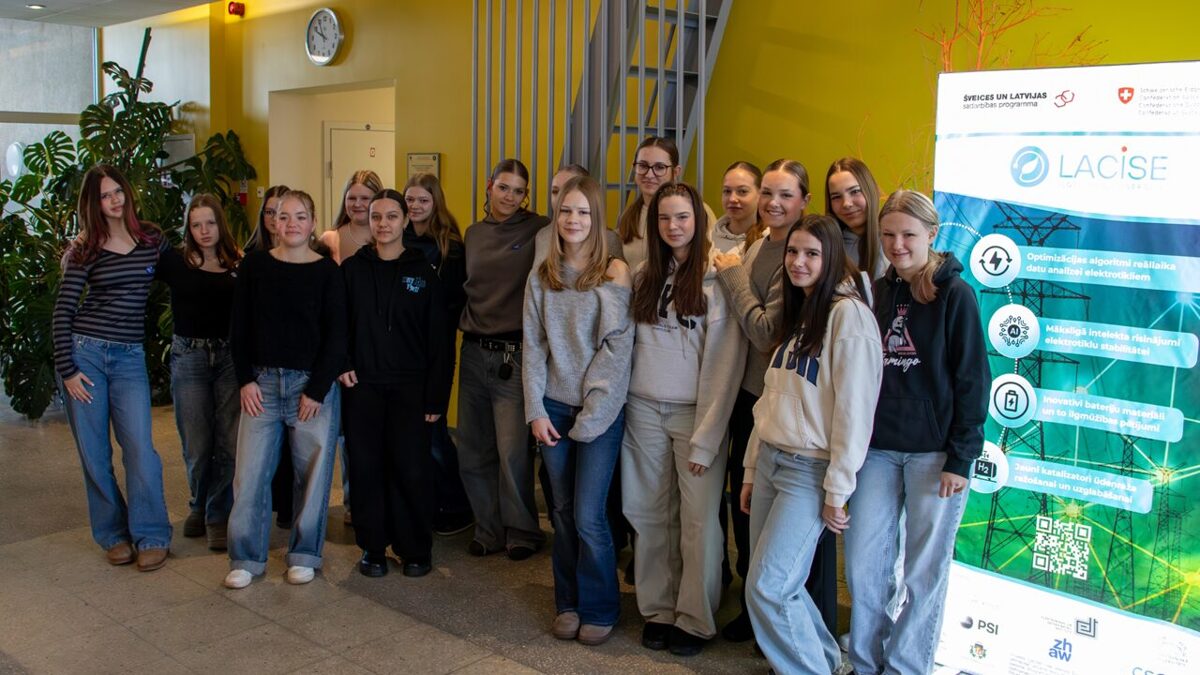 Ozolnieki Secondary School 8th-grade students at ISSP UL. Photo: Matīss Mačulāns.
When a group of girls from Ozolnieki Secondary School stepped through the doors of the Institute of Solid State Physics, University of Latvia (ISSP UL) in early February, they weren’t just entering a research facility – they were stepping into the world of science, discovery, and possibility.
For many young women outside Riga, opportunities to meet scientists or see laboratories up close can be rare. One of the LACISE project’s core missions is to change that – to open the doors of science wider, spark curiosity, and show girls that STEM is not a distant field reserved for a select few, but a place where they, too, belong.
This field trip became exactly that: an inspiring, hands‑on experience that brought science to life.
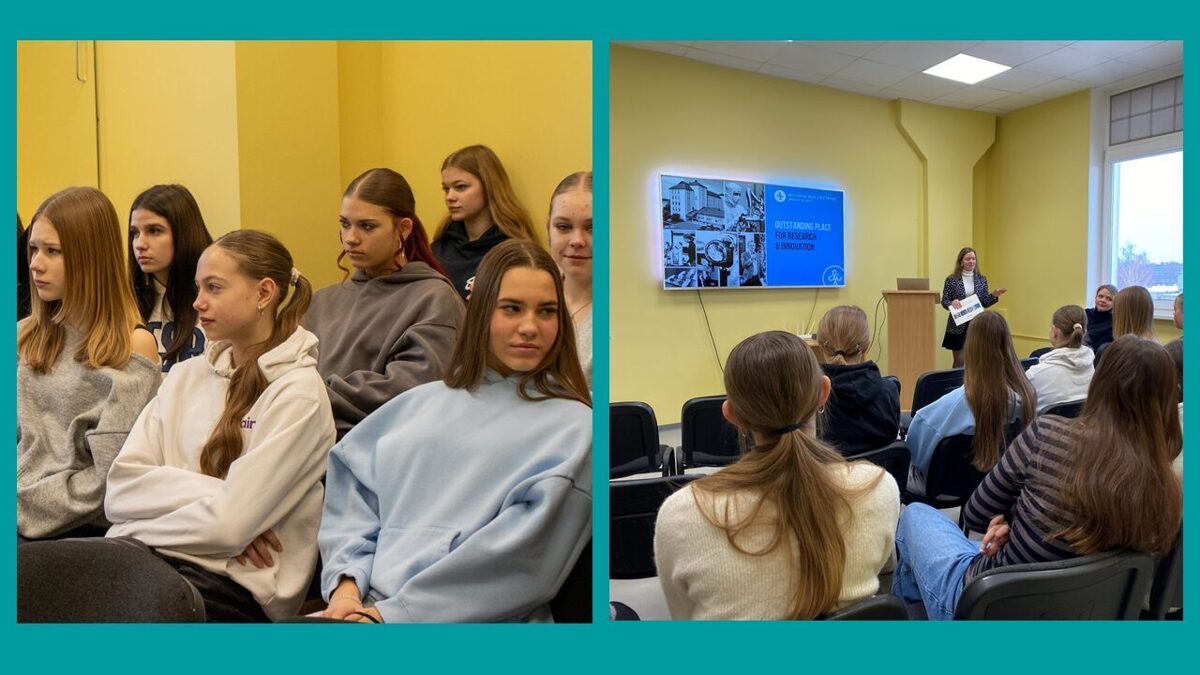 Girls listen to a presentation about the ISSP UL and Milena Dile’s story of how she became a scientist.
A Scientist’s Journey — Told by Someone Living It
The visit began with the research assistant from the Optical Materials Laboratory, Miļena Dile, greeting the girls with a warm smile and an open story. She spoke not only about the institute’s research areas and recent achievements, but also about her own path – a journey filled with questions, persistence, and the thrill of discovery.
Her openness encouraged the girls to ask their questions.
What does it take to become a scientist?
How long do studies last?
What can you do after university?
The conversation quickly turned into a lively dialogue – a room full of curiosity, ambition, and honest interest.
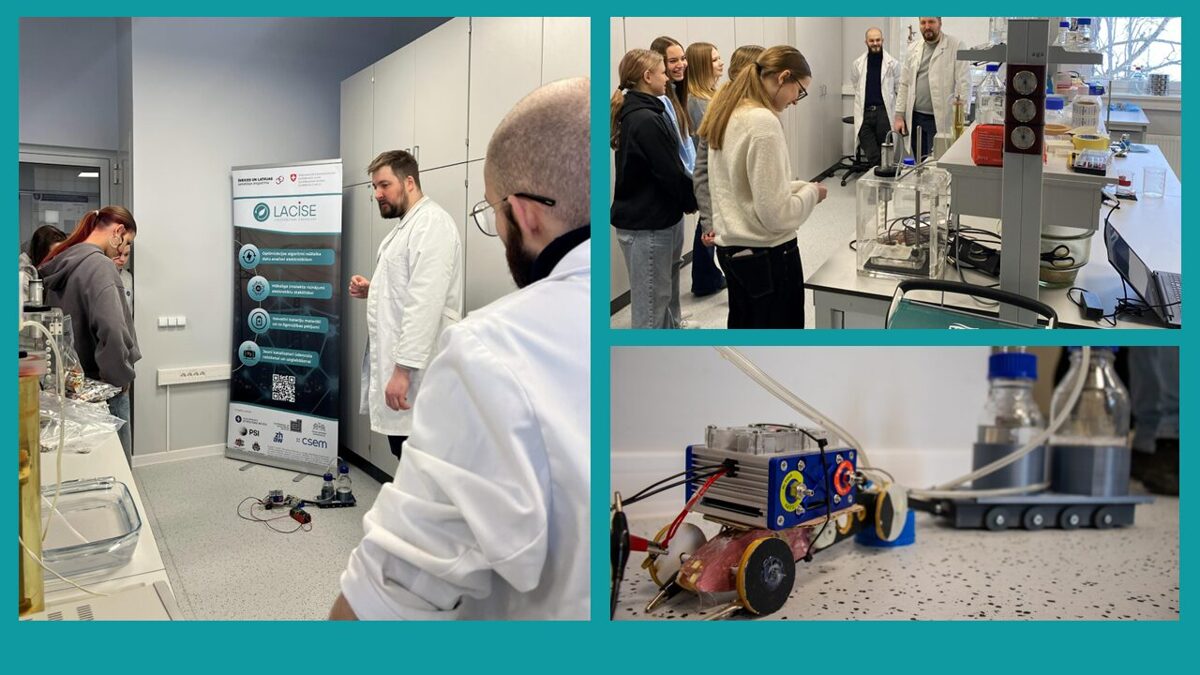 Researchers Anzelms Zukuls and Ņikita Griščenko from the Energy Materials Laboratory talk about hydrogen.
The Secrets of Hydrogen: Experiments in the Energy Materials Laboratory
The next stop brought the group into the Energy Materials Laboratory, where researchers Anzelms Zukuls and Nikita Griščenko revealed the science behind hydrogen production. The girls learned how something as ordinary as waste aluminum – hidden in juice cartons or potato chips bags – can fuel a chemical reaction that produces hydrogen gas.
A chemical reaction that produces hydrogen.
Watching the reaction happen in real time was exciting enough, but the highlight came when they tested a miniature car powered by the hydrogen produced in the same way they just observed.
And then – the moment filled with laughter and a bit of surprise – they felt hydrogen bubbles pop right in their hands. A tiny explosion. A big memory.
Looking Deeper: Material Analysis in the Spectroscopy Laboratory
The atmosphere shifted from playful to precise as research assistant Rihards Ruska welcomed them into the Spectroscopy Laboratory. Here, the girls discovered how scientists explore the properties of materials at the atomic level – knowledge that powers modern electronics, medicine, and countless technologies we rely on daily.
They saw impressive instruments:
- A cryostat for studying materials at extremely low temperatures,
- A X-ray photoelectron spectrometer (XPS) for analyzing chemical composition,
- High-temperature furnaces are essential for developing new materials.
This was science in its most technical form – yet still full of wonder.
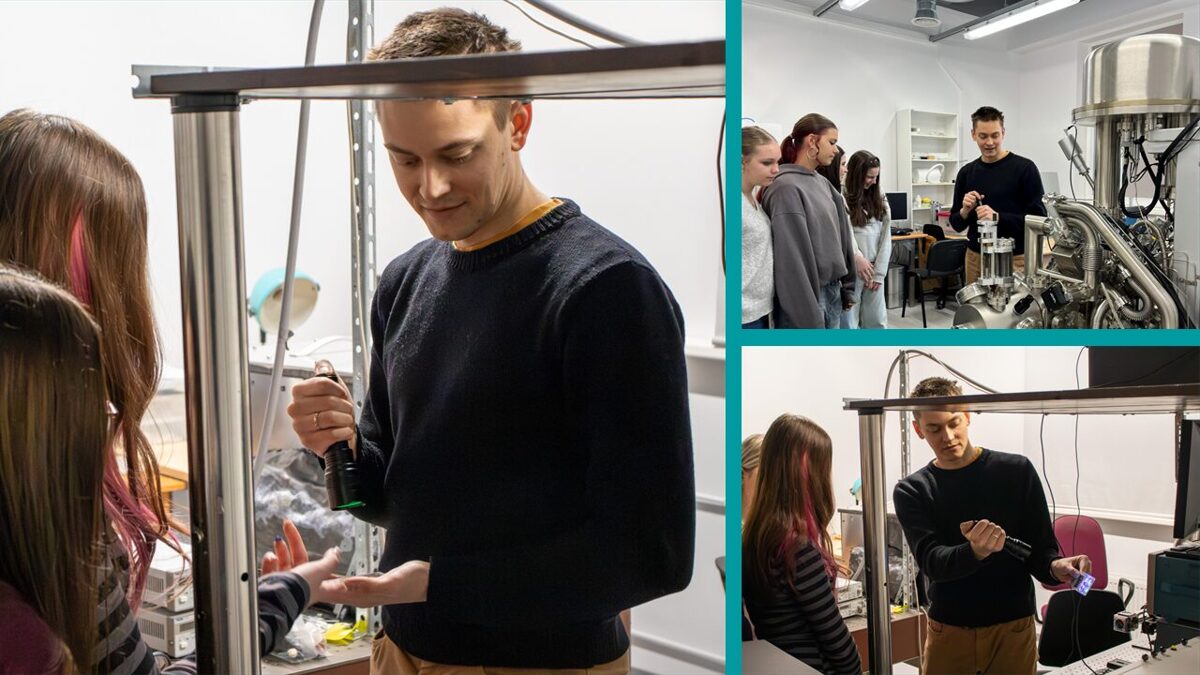 Rihards Ruska explains to students from Ozolnieki Secondary School what different spectroscopy methods can reveal about materials. Photo: Matīss Mačulāns.
What’s Inside a Battery? The Girls Find Out
The journey continued back to the Energy Materials Laboratory, where researchers Ināra Ņesterova and Einārs Sprūģis guided the girls into the world of batteries — their structure, the materials inside, and why some parts of battery research must be done in a controlled argon atmosphere. This time, the visit turned fully hands‑on.
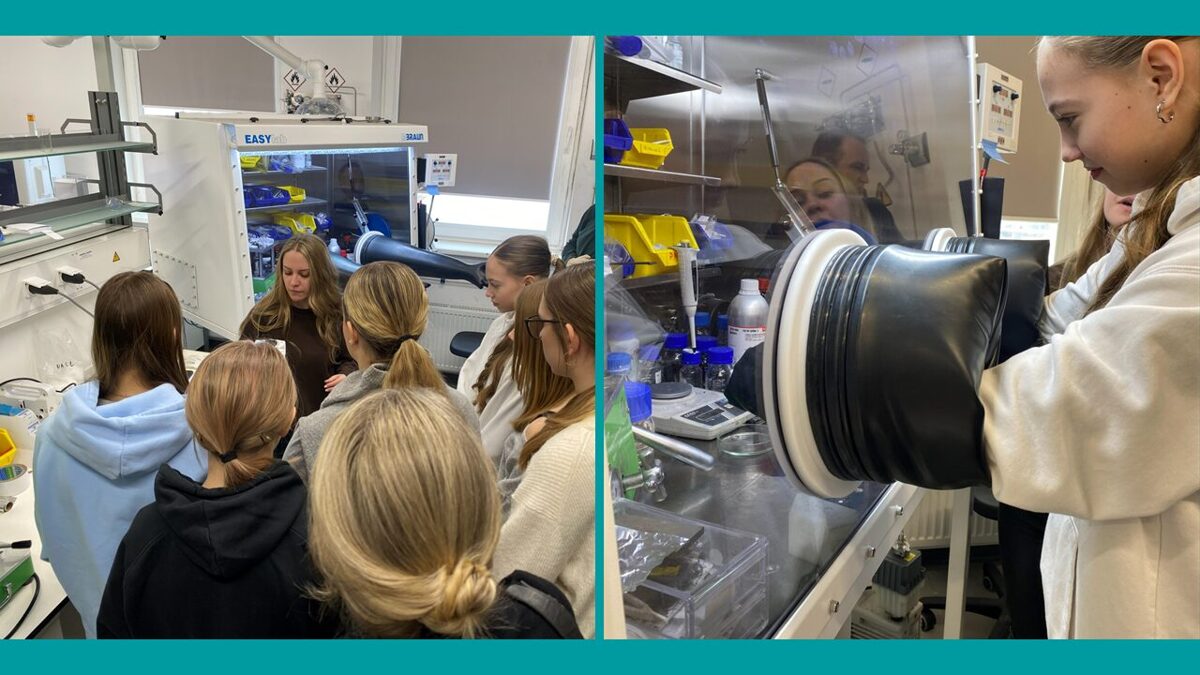 Ināra Ņesterova talks about batteries and lets visitors try the glovebox.
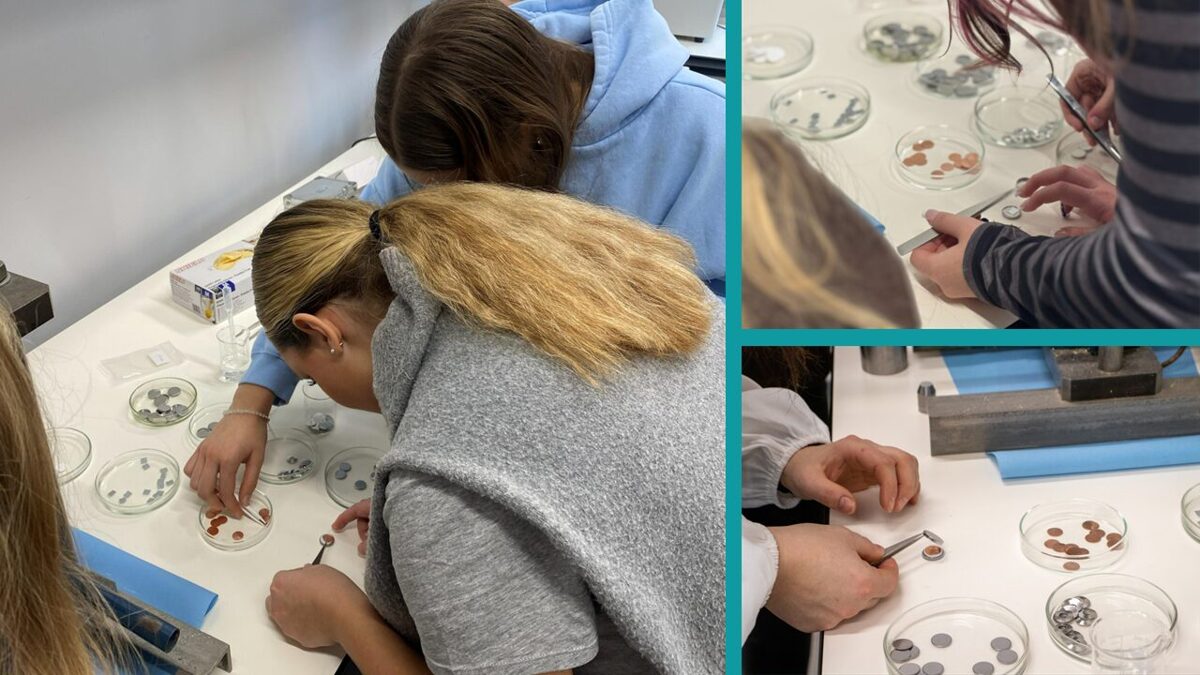 Students from Ozolnieki Secondary School assemble their own batteries.
Silver, Light, and the Magic of the Nanoscale
The final stop brought everyone back to Miļena’s laboratory. Here, the girls saw how materials change when they shrink to the nanoscale – particularly silver, which shifts color depending on particle size.
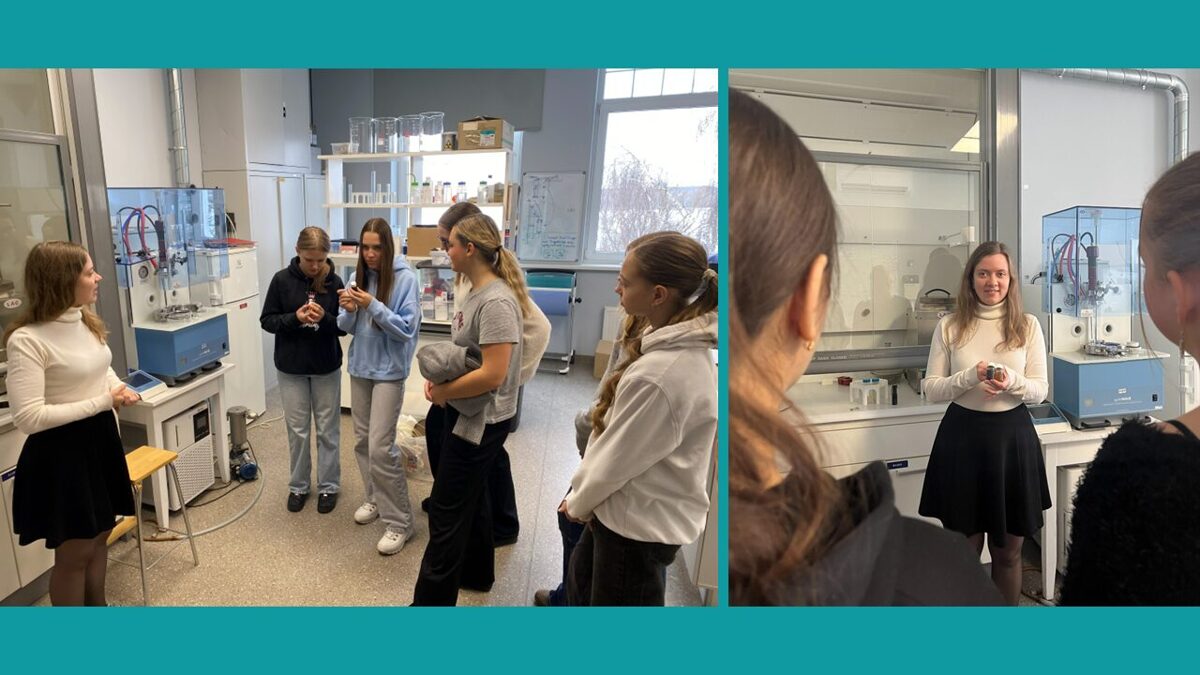 Miļena Dile discusses the Optical Materials Laboratory's work and the equipment used there.
Why Experiences Like This Matter
This field trip was more than a day away from school. It showed that science is not distant – it’s reachable, laboratories are not closed spaces – they are open to young minds, and STEM is not only for a chosen few – it’s for every curious girl willing to explore.
By offering hands‑on experiences, real conversations with scientists, and a glimpse into the world of advanced research, LACISE helps build the next generation of thinkers, innovators, and researchers.
And perhaps – just perhaps – one of the girls who walked through ISSP UL that February morning will return one day as a scientist.