Shaping the Future of Energy: ISSP UL’s Role in the LACISE Project
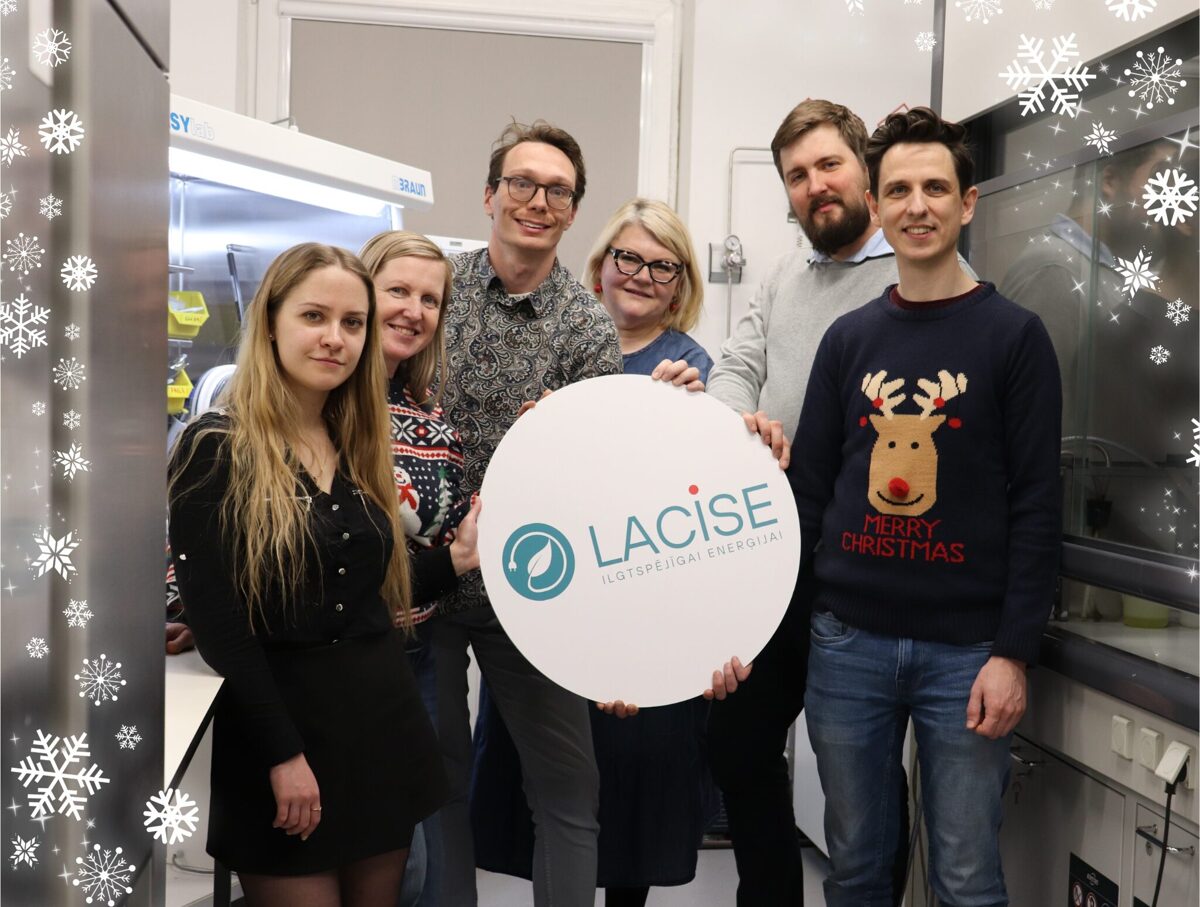 ISSP UL's team at the Energy Materials Laboratory: Ināra Ņesterova, Maija Bebre, Niks Smelters, Inese Jansone, Anzelms Zukuls, Gints Kučinskis. Photo: Laura Ločmele.
The Institute of Solid State Physics, University of Latvia (ISSP UL) is a key partner in the LACISE project—one of two projects under the Swiss–Latvian cooperation programme “Partnership in Applied Research.” From the outset, ISSP UL has played a dual role: coordinating two major research directions—batteries and hydrogen—and managing project administration to ensure smooth implementation and effective collaboration with partners.
Within the project, ISSP UL leads Work Package 1 (WP1), which covers project management, communication, dissemination, and industry engagement. Our responsibilities include coordinating activities, organizing strategic meetings, and overseeing the creation of the Digital Swiss–Latvian Competence Centre for Smart Energy. Through conferences, seminars, and public outreach, we aim to inspire the next generation of scientists and encourage young people—especially girls—to pursue careers in STEM.
WP1 is implemented by the LACISE project coordinator, Dr. phys. Gints Kučinskis, Head of the Energy Materials Laboratory at ISSP UL. Administrative coordination is managed by Maija Bebre, with support from Ieva Piņķe, while communication activities are planned and executed by Inese Jansone.
ISSP UL also manages two additional work packages: WP4 and WP5.
- WP4 focuses on next-generation battery technologies. Our team is developing cobalt-free cathode materials and silicon-enhanced graphite anodes, assembling full battery cells, and applying advanced methods to analyze the aging mechanisms of these cells. The goal is to create safer, longer-lasting batteries suitable for grid-scale energy storage. Key contributors include Gints Kučinskis, Niks Smelters, Ināra Ņesterova, Alīna Paula Ķirse, Ansis Mežulis, and others.
- WP5 explores sustainable hydrogen production, specifically using waste aluminum from end-of-life window frames, beverage packaging, and other aluminum-containing materials. Our aim is to develop efficient, environmentally friendly hydrogen production technologies. This work involves researchers from the Energy Materials Laboratory, including Līga Grīnberga, Ainārs Knoks, Anzelms Zukuls, Ņikita Griščenko, and several master’s and bachelor’s students.
The ISSP UL fosters collaboration with Latvian partners—the Institute of Electronics and Computer Science and Riga Technical University—as well as Swiss partners: the Paul Scherrer Institute, Zurich University of Applied Sciences, and the Swiss Center for Electronics and Microtechnology. Together with our Swiss colleagues, we have initiated training programs for new researchers.
“LACISE is a very important project for our institute. It enables us to advance research in battery and hydrogen energy while supporting the professional growth of young scientists. The project creates opportunities to strengthen ties with local and international industry and lays the foundation for long-term partnerships with leading Swiss research institutes,” says Gints Kučinskis, Head of the Energy Materials Laboratory and project coordinator.
For ISSP UL, LACISE is more than a project—it is an opportunity to shape the future of energy through research, collaboration, education, and the engagement of the next generation.