Hydrogen from Everyday Waste – A School Student Research on the Energy of the Future Inspired by LACISE
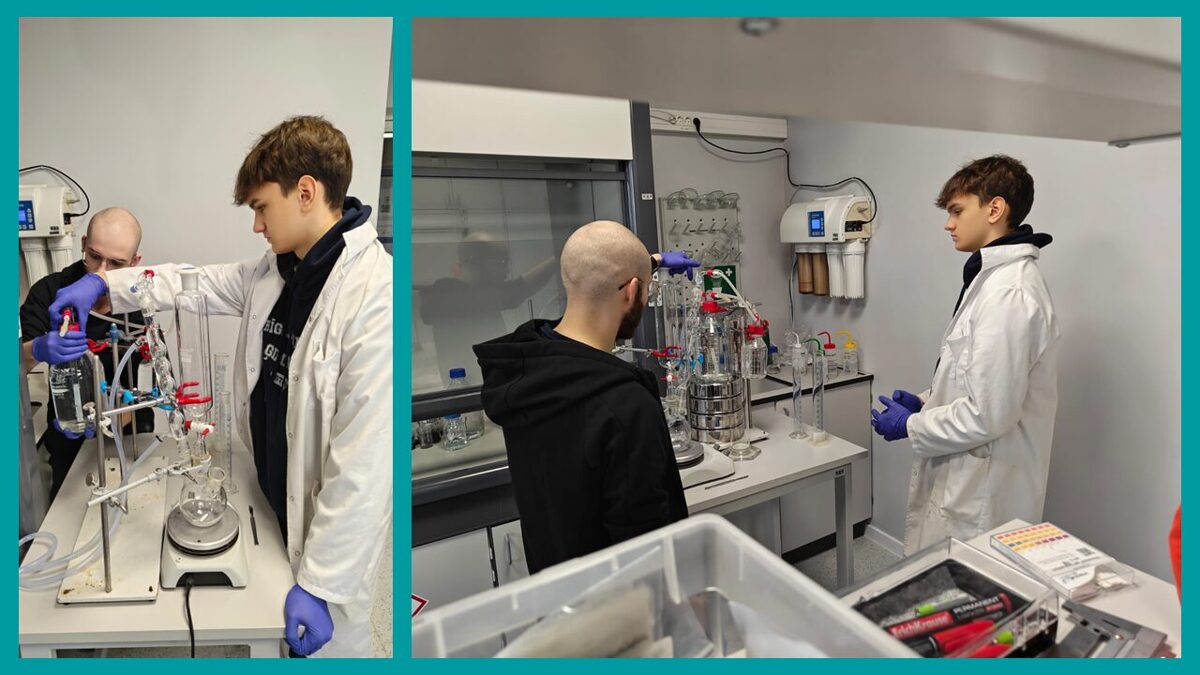 Gustavs Lukašs and Ņikita Griščenko at the Energy Materials Laboratory of the Institute of Solid State Physics, University of Latvia. Photo - Anzelms Zukuls.
Imagine if everyday aluminum waste could hold the key to cleaner energy. That’s the question explored by Gustavs Lukašs, an 11th-grade student at Riga State Gymnasium No. 1, who has chosen the chemistry and biology track at school. Gustavs is among the young innovators inspired by the LACISE project, which offers a unique chance to tackle real-world STEM challenges and collaborate with scientists.
From Idea to Laboratory Experiments
Gustavs discovered the LACISE project on social media while searching for opportunities to develop his scientific research paper (SRP) in a professional lab setting. His chosen topic – “The Potential for Hydrogen Production from Various Household Aluminum-Containing Waste” – bridges chemistry, biology, and sustainable energy. The goal? To determine how efficiently hydrogen can be generated from different aluminum waste materials (foil, beverage cans, shavings, etc.) by comparing reaction rates and hydrogen yield based on material properties.
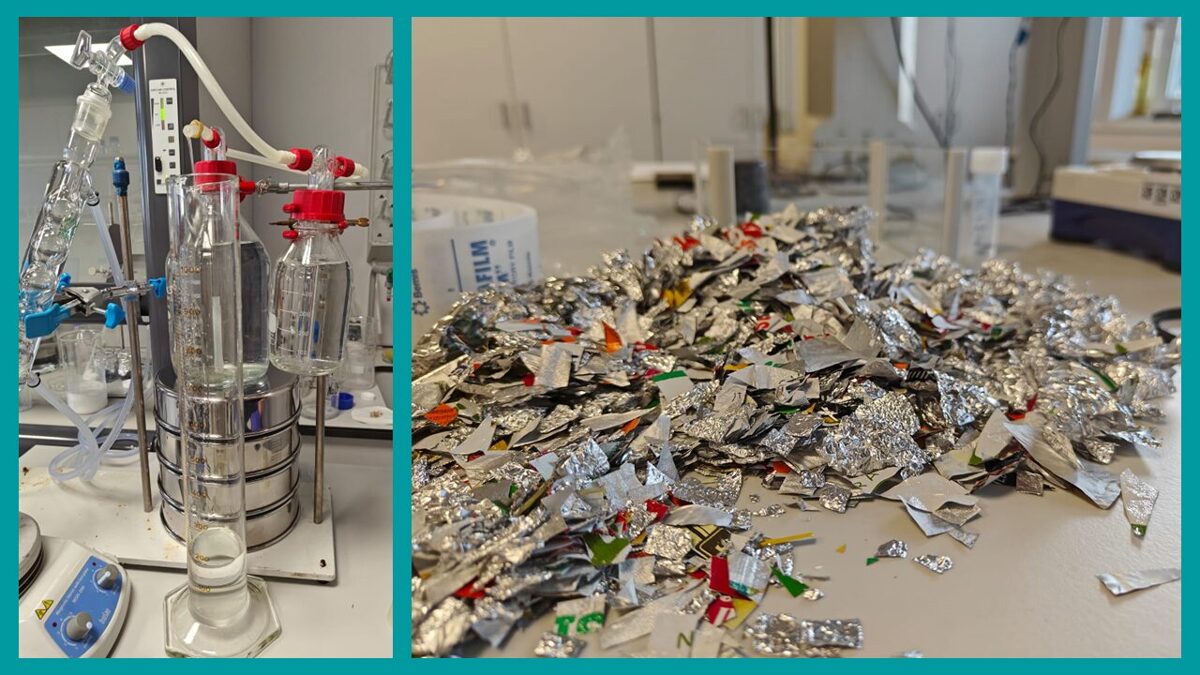 Research reactor and waste aluminum. Photo - Anzelms Zukuls.
Hands-On Experience – A Step Closer to Science
Laboratory work has been both thrilling and challenging for Gustavs. He’s mastered skills rarely accessible to high school students: operating electron and optical microscopes, using an X-ray diffractometer, and assembling the reactor needed for his experiments.
“All these skills will be invaluable if I choose a career in science,” Gustavs shares. His research takes place at the Energy Materials Laboratory of the Institute of Solid State Physics, University of Latvia, equipped with cutting-edge technology and expert guidance. He credits his mentors – Mg.sc.ing. Ņikita Griščenko and PhD Anzelms Zukuls – for their support, which has made the process smooth and rewarding.
LACISE – Building Bridges Between Schools and Science
This story captures the essence of the LACISE project: connecting young minds with the scientific community, promoting STEM fields, and inspiring the next generation of researchers. Gustavs’ experience shows that working alongside scientists not only deepens knowledge but also provides practical skills that can shape future career choices.
In Gustavs’ Own Words
“If all scientists are as supportive as my mentors, I wholeheartedly recommend other students to seize such opportunities,” he says. The LACISE project proves that science isn’t just theory – it’s exciting, hands-on, and accessible to students.