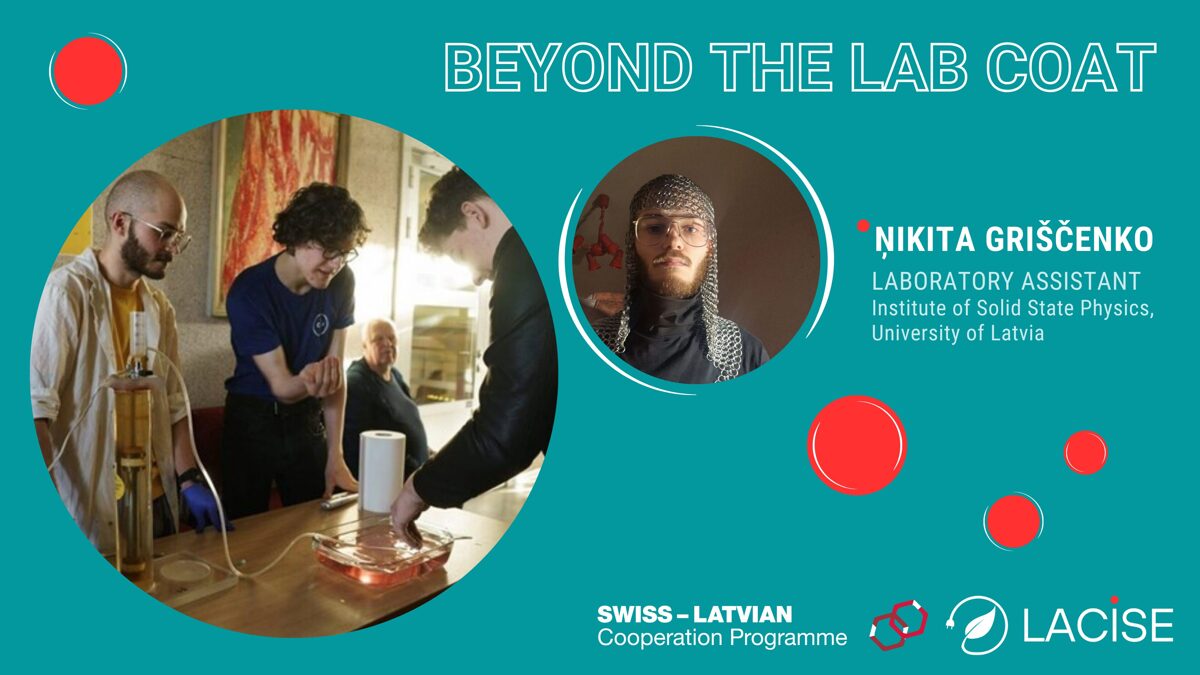
Beyond the lab coat - Ņikita Griščenko (Institute of Solid State Physics, University of Latvia)
Did you dream of becoming a scientist as a
child?
I haven’t dreamt of being a scientist as a child, I was playing with legos a
lot at that time, and thought I would be a architect or a builder in future,
but exactly in kindergarten, my teacher, said that I would become a scientist.
What inspired you
to pursue science?
I was inspired by
the desire to understand this world, to find out how everything works and by
what laws.
What do you love
most about being a scientist today?
You learn
something new every day.
What’s one myth about scientists you’d love to bust?I don't speak for all scientists, but I don't consider myself smart, although my friends do. Being a scientist doesn't mean just being smart; knowledge is built on diligence, patience, and consistency.
What’s the
weirdest or most unexpected thing you’ve learned in your field?
When I just
started studying in university, I was amazed at the variety of shapes and
structures of crystalline substances.
What’s your
favorite non-science hobby?
I play computer
games and board games with my friends. When I’m completely bored, I make
chainmail. And time to time I hunt with my dad.
If science were a
movie genre, what would it be?
Science would be a
thriller or a detective story because you don't always know where your research
might lead you…
What’s your
favorite movie?
Fight Club
What’s your
favorite book?
Roadside Picnic by Arkady and Boris Strugatsky
What music or song
always inspires you?
I listen to
Guided Meditation by Maciej Nowicki, when I am stuck with my thoughts and a
mental wall is in front of me.
If you weren’t a
scientist, what would you be doing today?
It's hard for me
to imagine myself anywhere outside of science.
If you could
invite any scientist—past or present—to dinner, who would it be?
If I had the opportunity, I would like to talk to Nikola Tesla, because
he did so much for humanity in the field of electrical engineering, radio
engineering and electrical engineering.
Beyond the lab coat - Juris Siliņš (Riga Technical University)
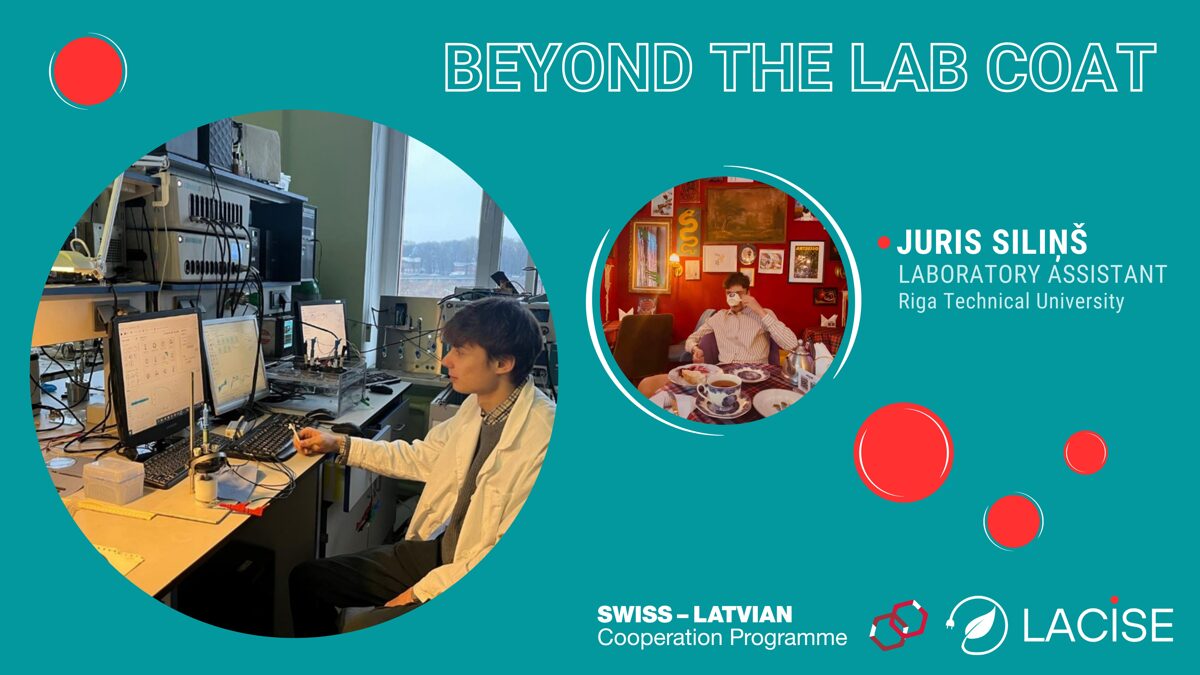 Photos: Juris Siliņš working in the lab; Juris enjoying tea after playing chess.
Did you dream of
becoming a scientist as a child?
Yes.
What do you love
most about being a scientist today?
Having a job that
feels like a hobby.
What’s one myth
about scientists you’d love to bust?
Not all scientists
wear glasses and carry around big books.
What’s your
favorite non-science hobby?
Chess.
If science were a
movie genre, what would it be?
I do not think any
movie genre has anything to do with science.
What’s your
favorite movie?
“Breakfast at
Tiffany's”
What’s your
favorite book?
“The Master and
Margarita”
What music or song
always inspires you?
Classical music,
especially Medieval sacred music.
If you weren’t a
scientist, what would you be doing today?
I would be trying to
become a clinical pharmacist in a psychiatric hospital.
If you could invite
any scientist—past or present—to dinner, who would it be?
Nikola Tesla.
Beyond the Lab Coat - Artūrs Ņikuļins (Institute of Electronics and Computer Science)
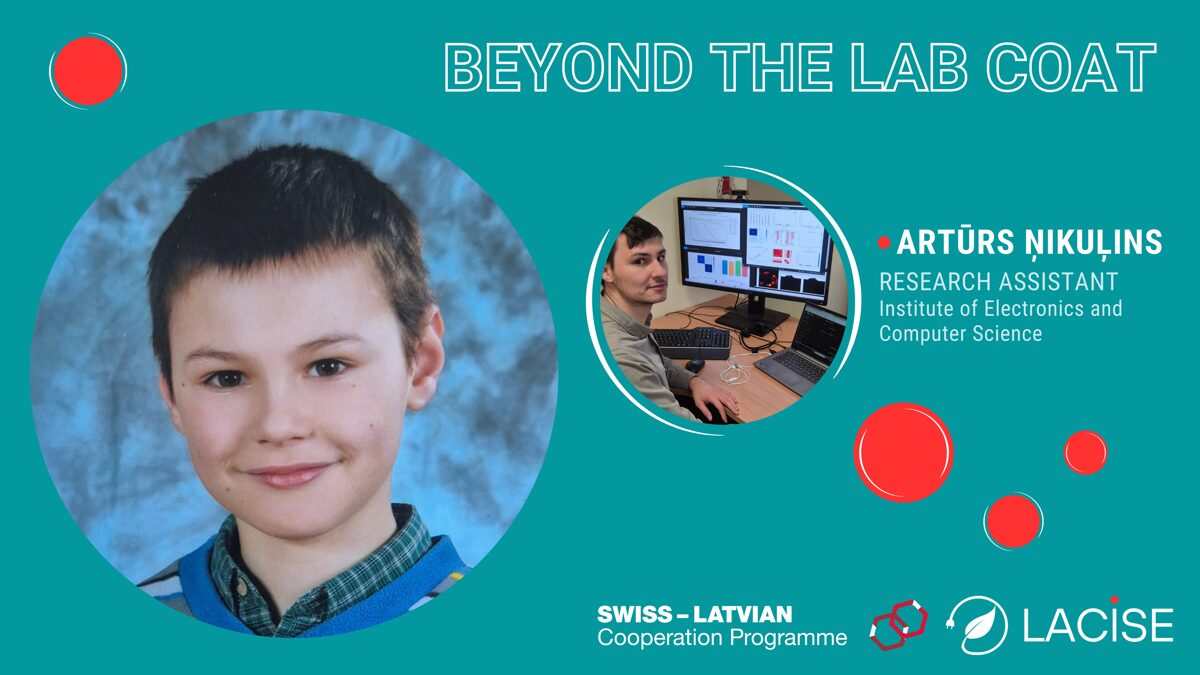 Pictures: Artūrs in his childhood and at work
Did you dream of becoming a scientist as a child?
I position
myself as an artificial intelligence (AI) scientist today, but I did not dream
of becoming a scientist as a child. In fact, I never imagined I would work in
the AI field. It simply wasn’t a visible or accessible topic during my school
years. I was quite good at mathematics and enjoyed physics, but computer
science was not my main interest at that time. I liked informatics only
slightly. We studied basic concepts such as Microsoft Office and simple
algorithms.
I did not grow up dreaming of becoming a scientist; rather, I followed what captured my attention and allowed myself to grow naturally into this path. I tend to go with the flow.
What
inspired you to pursue science?
I always
knew I would choose something technical, and ideally something with a bit of
creativity. I enjoyed listening to music while studying, and that blend of
technical focus and creative atmosphere helped shape my preferences. What
eventually drew me into AI was the realization of how powerful and diverse it
has become - from complex analytical tasks to generating artistic images,
composing music, and offering meaningful advice for everyday life. This field
is still far from perfect, and that motivates me. I appreciate understanding
how these systems work and exploring new research directions.
What
do you love most about being a scientist today?
What I love
most about being a scientist is the constant need to learn something new. While
many fundamental principles remain unchanged, researchers around the world
continue to build innovative methods on top of these foundations. Sometimes
this process leads to genuinely creative breakthroughs, which makes the field
inspiring and dynamic.
I appreciate the pace at which state-of-the-art ideas evolve and the challenge of moving beyond them. Staying updated through research publications and participating in scientific conferences allows me to exchange ideas with scientists from all over the world. This continuous intellectual movement and curiosity-driven progress are what I enjoy the most.
What’s one myth about scientists you’d love to bust?
One myth I
would love to bust is the stereotype that all scientists walk around in lab
coats and glasses. As a child, that was exactly how I imagined a scientist, but
the reality, at least in my field, is quite different. While some laboratories
still require that kind of equipment, modern scientific work is much more
diverse.
Most of the time, science is more like designing a clear roadmap: analysing a problem, planning a solution, and shaping ideas together with colleagues. The safety glasses usually appear only at the final testing stage - just in case something decides to explode. And if it does, we simply return to planning and refining our ideas as a team.
What’s the weirdest or most unexpected thing you’ve learned in your field?
The most
unexpected thing I’ve learned is how many parallels we can draw between
artificial intelligence and the human mind. I was genuinely surprised when I
discovered that AI can compose music or create artwork. These are abilities we
once thought were uniquely human. When we design technology, we often borrow
concepts from nature, taking the best ideas we understand and embedding them
into our creations.
That is where the parallels become clear: AI systems use attention mechanisms to focus on important details before producing a final decision, and they learn their parameters through experience. In many ways, working with AI is similar to teaching a child - guiding, shaping, and supervising its learning process. It can feel a bit unsettling, but it’s still controllable.
What’s your favorite non-science hobby?
I would say
chess. I enjoy board games in general, but chess is one of my favourites. The
number of possible positions exceeds the number of atoms in the universe, which
means the game can never be fully solved, not by humans and not by AI. It
surprises me that modern engines are far stronger than any human player in
chess. AI can generalize extremely well and even demonstrate forms of
creativity when evaluating positions that have never appeared in any database.
If
science were a movie genre, what would it be?
Definitely
futuristic science fiction, because science always feels a step ahead of the
world around us. Many ideas are still experimental, and some are better kept
inside the lab until they mature. And what happens in a scientist’s mind is a
story of its own. A mix of creativity, imagining new possibilities, and finding
fresh solutions to problems that have existed for decades, often using new
tools like AI, which can offer novel approaches and broaden the range of
possibilities.
What’s your favourite movie?
I have
several favourite movies, both scientific and non-scientific. I usually look
for a sense of purpose and adventure, something that resonates emotionally.
“Back to the Future” is a great trilogy that I really enjoy, and “The Green
Mile” is another film that stayed with me. I also appreciate good comedies, and
one of my favourites is the Bollywood film “3 Idiots”, a movie I genuinely
recommend.
What’s your favorite book?
As a
Latvian, I naturally gravitate toward Latvian literature. These stories are
heartfelt, richly written, and I simply enjoy spending time with them. Reading
them helps me rest. Works like “Mērnieku laiki” by the Kaudzīte brothers or
“Lazdu laipa” by Ilze Indrāne are great examples. I also enjoy the work of the
Russian writer Dostoevsky; his books contain deep reflections on human nature.
His characters are multifaceted, revealing new psychological depths as the
story unfolds.
When it comes to scientific reading, I have trained myself to follow research papers and recent achievements online. Books have a unique atmosphere and emotional depth, so I usually read fiction in book form, while for scientific or technical learning I prefer reading on a computer screen.
What
music or song always inspires you?
When I’m
working, I especially enjoy slower music, such as blues or classical. I try to
maintain a sense of inner calm, which I believe is essential in science. It
helps to take the messy, chaotic information from the outside world and
transform it into something meaningful and structured.
If
you weren’t a scientist, what would you be doing today?
To be
honest, it’s difficult for me to give a perfect answer to this question. As I
mentioned earlier, I tend to go with the flow and focus on what genuinely
interests me. New interests often emerge through the work itself. I enjoy
collaborating in a team, but I also value the moments when I can sit alone and
just think.
However, if I had to choose an alternative path, I would probably say telecommunications. My bachelor’s degree is in that field, so I could imagine myself working for a company like LMT, which is one of the main mobile phone operators in Latvia.
If
you could invite any scientist—past or present—to dinner, who would it be?
I would
like to invite a scientist who works in a field I understand less. Quantum
mechanics, for example, is an interesting field for me, even though I do not
know much about it. I think Richard Feynman would be an ideal guest, because he
had a remarkable ability to explain complicated ideas in simple and engaging
terms.
Beyond the Lab Coat - Anzelms Zukuls (Institute of Solid State Physics, University of Latvia)
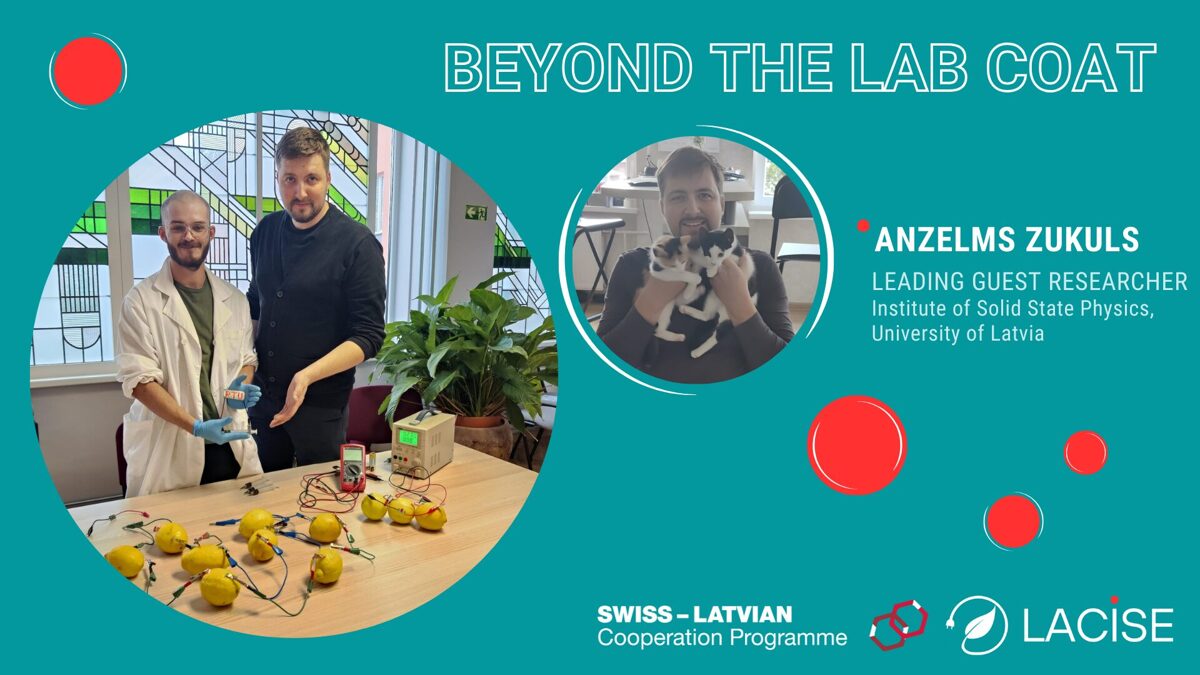 Photos: Anzelms with his colleague performing lemon-battery experiment and Anzelms with kittens
Did you dream of becoming a scientist as a child?
Yes, I dreamed of being a scientist.
What inspired you to pursue science?
The inspiration that drove my curiosity was nanotechnology, with its complex
gear systems and innovative perspective.
What do you love most about being a scientist today?
Nowadays, scientists have access to a wide variety of interesting research
methods that make our work exciting and allow us to investigate many scientific
mysteries.
What’s one myth about scientists you’d love to bust?
Scientists do not work alone in laboratories. Today, scientific discoveries and
growth occur by combining knowledge from different research directions and
fields of science. Only a broad view of scientific problems promotes new
discoveries.
What’s the weirdest or most unexpected thing you’ve
learned in your field?
The strangest and most unexpected thing I've learned in my field is that the
same material can have many different uses in everyday situations.
What’s your favorite non-science hobby?
I like hiking and walking in different places, such as swamps, forests, walking
trails, and the seashore.
If science were a movie genre, what would it be?
Documentary - due to the number of studies that have to be conducted to find
something new and exciting.
What’s your favorite movie?
Interstellar
What’s your favorite book?
Blizard of Souls by Aleksandrs Grīns
What music or song always inspires you?
Trance
If you weren’t a scientist, what would you be doing
today?
Engineer in R&D department
If you could invite any scientist—past or present—to
dinner, who would it be?
Dr. Michio Kaku
Beyond the Lab Coat - Dr. Miguel Ramírez-González (ZHAW, Switzerland)
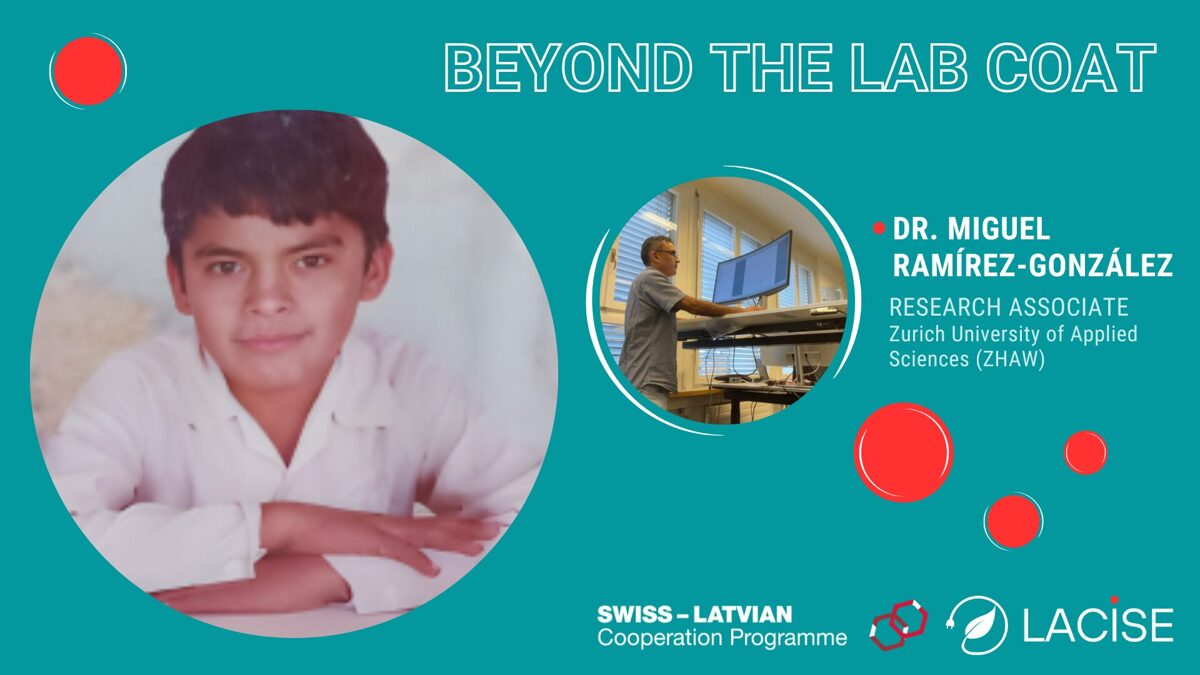 Photo: Dr. Miguel Ramírez-González in childhood and now
Did you dream of becoming a scientist as a child?
No at all. As far as I remember, I was mainly focused on the
present time. However, I can say that the thought of becoming a medical doctor once
crossed my mind. But it was not necessarily a dream job.
What inspired you to pursue science?
I think it was during the time I was working on my bachelor's
thesis at a research center in Mexico (Electric Research Institute). Contact
and interaction with researchers, whether at the MSc or PhD level, further sparked my curiosity about pursuing postgraduate studies. Probably, this curiosity
for science was already inside me as a child because my father is an electrician.
I remember that I used to accompany him when he had to do some electrical
installation. So, somehow, I wanted to be able to know how he did these things.
What do you love most about being a scientist today?
Well, I can say it is always about learning more. One can
probably solve a small problem just to realize that there are many bigger ones to
solve.
What’s one myth about scientists you’d love to bust?
Well, maybe people can say that scientists lack flexibility
because they are rigid, logical thinkers with no creativity at all. However, solving
a problem may require a lot of flexibility, creativity, and imagination to
explore a world of possibilities and see what is not evident at all.
What’s the weirdest or most unexpected thing you’ve
learned in your field?
Mmhhhh, I don’t think that it is weird or unexpected. But,
in general, whenever I have trouble trying to solve something, the best thing
to do is to stop thinking about it for maybe one day. Then, by retaking the
problem after this break, something comes to mind that helps me get out of the
hole I was in. This has happened to me many times.
What’s your favorite non-science hobby?
I like running. So, I have participated in several 5 km and
10 km races.
If science were a movie genre, what would it be?
I think it would be a combination of action (lots of chases
and fights), comedy (provoking humor and laughter), drama (due to emotional
conflicts), terror (capable of generating fear, tension, and shocks), and
suspense (a lot of intrigue). One thing is for sure: the happy ending is not
guaranteed.
What’s your favorite movie?
I guess I don’t have a favorite movie, but I enjoy a lot of action
films.
What’s your favorite book?
Probably, “The Alchemist” by Paulo Coelho.
What music or song always inspires you?
Probably no particular song. Sometimes I like listening to
instrumental music to relax a little bit.
If you weren’t a scientist, what would you be doing
today?
Good question. I have no idea.
If you could invite any scientist—past or present—to
dinner, who would it be?
Probably Albert Einstein. Don’t ask me why.
Beyond the Lab Coat - Emiliana Fabbri (Paul Scherrer Institute, Switzerland)
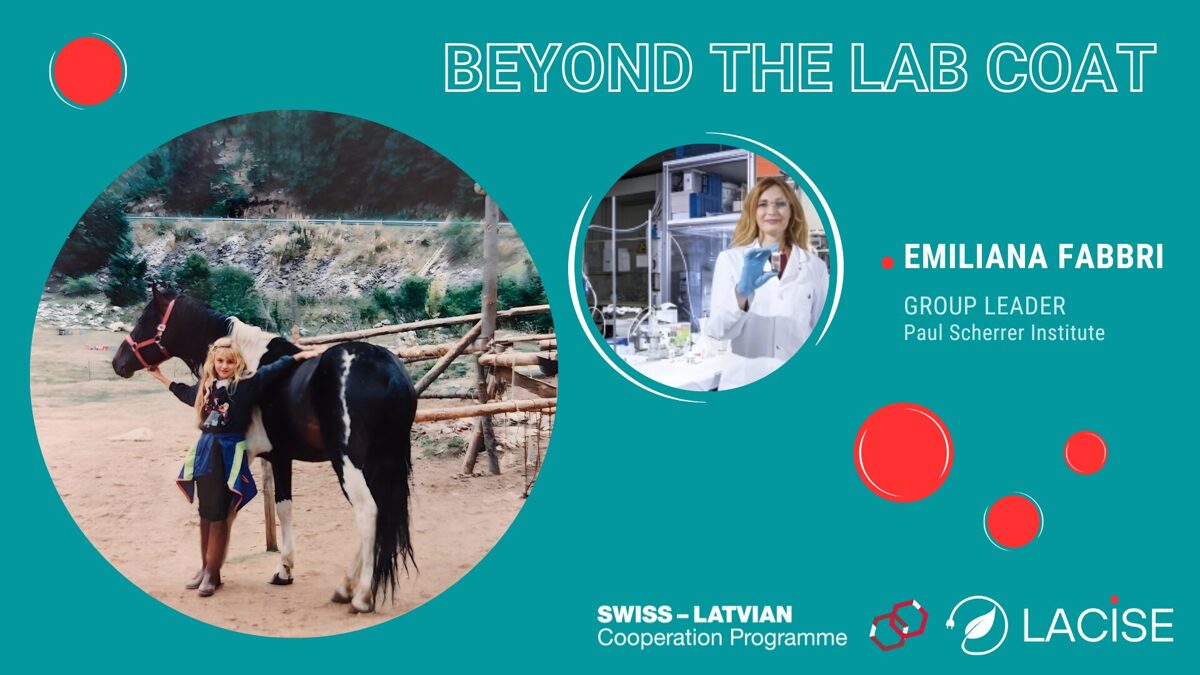 Emiliana in childhood and now - co-leading the Electrocatalysis and Interface group at the Electrochemistry Laboratory of the Paul Scherrer Institute.
Did you
dream of becoming a scientist as a child?
Not really.
As a child, I dreamed of many different careers, ranging from writer to
veterinarian or even horse rider. My favorite subjects in high school were
literature and philosophy. However, I was also strong in chemistry and
mathematics, and I always wanted to contribute to a more sustainable world.
For this reason, I studied Materials Science, and during my PhD and postdoctoral journey, I had the opportunity to work in different countries, including the USA and Japan. Over time, reading became my hobby, and science became my profession (but somehow also my hobby!).
What
inspired you to pursue science?
I studied
Materials science because one of my favorite books as a child was “The Big Book
of Why?” I was always fascinated by why different materials have the properties they do. Why is something red and not blue? So now I look at the electronic
and local structure of materials to understand why some materials are good at
converting energy into hydrogen, and use this understanding to develop more
efficient and sustainable materials for hydrogen production.
What do
you love most about being a scientist today?
Changing
our energy system is possible, and contributing to that change is a duty and an
honor. Fundamental science done at PSI can greatly contribute to more sustainable technologies, such as fuel cells and electrolyzers. In addition,
supporting the new generation of scientists is crucial to this transformation.
What’s
one myth about scientists you’d love to bust?
People
usually see the successful results, like developing efficient water-splitting
materials, but behind that are many failed attempts. Each failure teaches us
something new and brings us closer to the final breakthrough.
What’s
your favorite non-science hobby?
Considering
that my new group leader position involves a lot of desk work, I now really
enjoy spending time working in my garden and walking in nature.
If
science were a movie genre, what would it be?
For sure,
science fiction!
What’s
your favorite movie?
It’s
impossible to choose only one!
What’s
your favorite book?
It’s
impossible to choose only one!
What
music or song always inspires you?
I love a
multidisciplinary approach, and the same applies to music—I enjoy many
different styles and genres.
If you
weren’t a scientist, what would you be doing today?
Writer,
philosopher, journalist… There are so many possibilities that I would truly
love to become.
If you
could invite any scientist—past or present—to dinner, who would it be?
Marie
Skłodowska-Curie.
Beyond the Lab Coat - Mairis Iesalnieks (Riga Technical University)
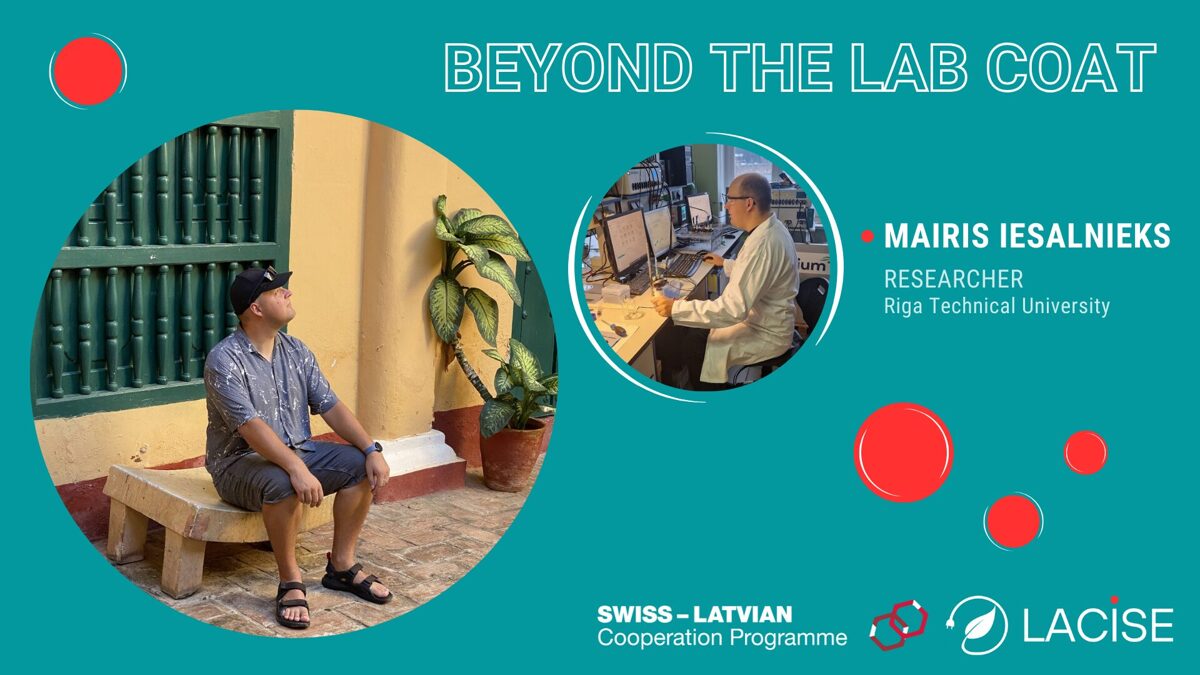
Did you dream of becoming a scientist as a child?
As unusual as it sounds, I never really had a dream
profession. I was always passionate about learning and enjoyed discovering new
things. I was always bored in school, so I looked for ways to entertain myself.
What inspired you to pursue science?
I would say that my chemistry teacher was always passionate
about chemistry, and she really inspired me to pursue a career, initially not
in science, but at least in chemistry first.
What do you love most about being a scientist today?
A lack of routine means you are always doing something new
and trying different things to achieve a goal. You must be creative sometimes.
What’s one myth about scientists you’d love to bust?
That all scientists wear white coats and do things nobody is
interested in. From the outside, our work may seem useless, but with science,
you never know where it can lead; one small deviation from the course can
result in a highly beneficial discovery.
What’s the weirdest or most unexpected thing you’ve
learned in your field?
Nothing is fixed, everything changes constantly, and it's
very easy to be left behind.
What’s your favourite non-science hobby?
I really enjoy travelling. I think visiting new places helps
you look at the world with a different perspective, allowing you to widen your
horizon and accept things from a new viewpoint.
If science were a movie genre, what would it be?
I think the most suitable genre would be a fantasy movie.
You never know where you can end up; the journey is unpredictable, sometimes
dangerous, but the finality is always something breathtaking.
What’s your favourite movie?
I like the Harry Potter series. I always enjoyed the
mystical aspect of it. Who knows? Maybe because of that, I like science; you
can never be sure what to expect.
What’s your favourite book?
I don’t really have one favourite book, but I really enjoy
travel descriptions. You can travel with the author to the new and unseen
locations without leaving the room.
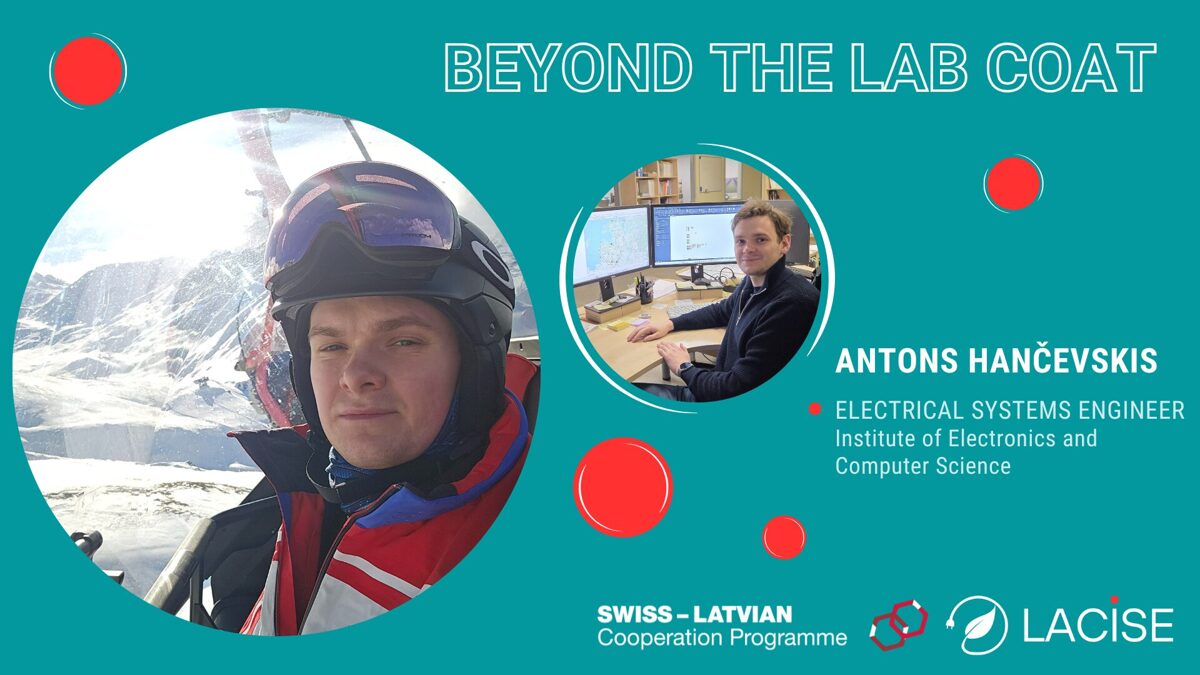
Beyond the Lab Coat - Antons Hančevskis (Institute of Electronics and Computer Science)
Did you dream of becoming a
scientist as a child? If not, what was your childhood dream job?
To be honest, I didn’t dream of
becoming a part of the scientific world; I was much more focused on something
in engineering or management. For a long time, I wasn’t even aware of the scale
of the scientific community in Latvia or how developed it actually is. However,
since joining the LACISE research team, I’ve been discovering this world and
diving deeper into it every day.
What inspired you to pursue
science?
My primary drive came from a
desire to delve deeper into Energy Systems and science itself. The turning
point was when Anna Mutule, my professor at Riga Technical University (and
supervisor for both my Bachelor’s and Master’s theses and upcoming PhD thesis),
offered me a fantastic opportunity to join the LACISE project alongside a team
of scientists from FEI (Institute of Physical Energetics) and EDI (Institute of Electronics and Computer Science). It was an opportunity I couldn't refuse.
What do you love most about
being a scientist today?
As a relative newcomer to
science, what I value most is the community. I love meeting people who have
been in research for a long time, learning from them, and listening to stories
about the various projects they’ve worked on. It is incredibly inspiring and
constantly gives me new ideas about what I could be a part of in the future.
What’s one myth about
scientists you’d love to bust?
I haven’t collected enough myths
to bust just yet! But I’m keeping my ears open and hope to identify a few good
ones in the near future.
What’s the weirdest or most
unexpected thing you’ve learned in your field?
I was surprised by the paradox of
collaboration. I’ve learned how difficult it can be to gather information and
initiate cooperation with stakeholders in the field—even when they are
interested and would clearly benefit from it. Convincing people to take that
first step and actually start working together is often harder than the
technical work itself.
What’s your favourite
non-science hobby?
I really enjoy skiing. Every
year, I try to travel to the Alps with my family. For me, that is the ultimate
holiday—it’s the one place and activity where my body and soul can recharge to
the maximum.
If science were a movie genre,
what would it be?
Science Fiction, without a doubt.
Most things we see in Sci-Fi films eventually come to life. And if they haven't
yet, it probably just means it’s too early, and we need to wait a bit longer
for the technology to catch up.
What’s your favourite movie?
The Devil Wears Prada. It’s a
nice, light movie with a good storyline and brilliant acting. Also, the music
there is great.
What’s your favourite book?
I wouldn’t say I have a single
favourite book, but I thoroughly enjoyed Theodore Dreiser's novel The Financier.
It tells the story of a financial genius and captures the intense atmosphere of
the business world, ambition, and the complex psychology behind success and
power.
What music or song always
inspires you?
I really enjoy Ozzy Osbourne. His
music holds a massive amount of energy that always gets me going.
If you weren’t a scientist,
what would you be doing today?
That is an easy one to answer
because I am doing it alongside research. Outside of science, I work as an
Electrical Engineer and the Head of the Technical Department at a firm. We
manufacture low-voltage power distribution and automation panels, and design
and assemble busbar systems for data centres and industrial buildings.
If you could invite any
scientist—past or present—to dinner, who would it be?
I would be very happy to have
dinner with Ferdinand Porsche. While he might not be strictly labeled a
"scientist" in the academic sense, he was a genius engineer and a
true pioneer in the automotive industry.
Beyond the Lab Coat - Ainārs Knoks (Institute of Solid State Physics, University of Latvia)
Did you dream of becoming a scientist as a child?
I didn't dream of being a scientist because I had no idea
that it was an option. But I had a lot of curiosity.
What inspired you to pursue science?
My teachers in school helped me to have the courage to
try.
What do you love most about being a scientist today?
I enjoy investigating how reality emerges and is expressed.
What’s one myth about scientists you’d love to bust?
That science is deterministic and final. There are many unknowns,
and we have only models (assumptions) of how things "work"; science
is the process of investigation rather than a final destination.
What’s the weirdest or most unexpected thing you’ve
learned in your field?
The most important part of good science and interesting
discoveries is a good team; people are the most important
investment/value.
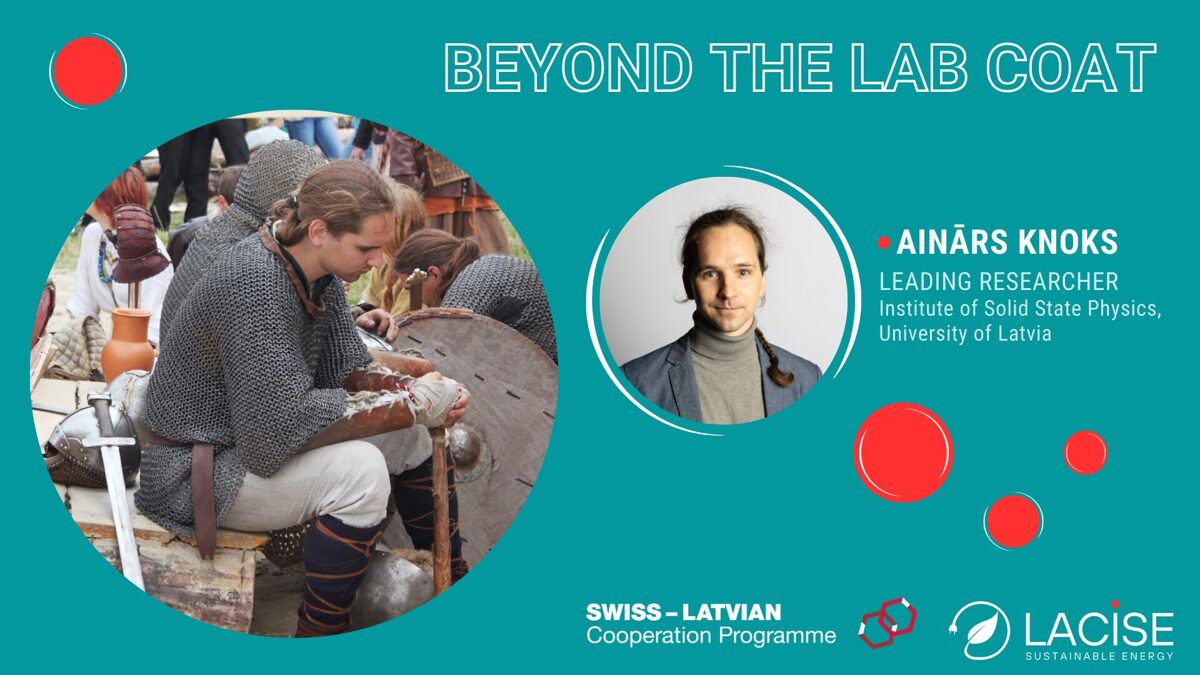
What’s your favorite non-science hobby?
Historical European Martial Arts (HEMA)/ Reconstruction,
which involves swords, armor, and fighting/fencing.
If science were a movie genre, what would it be?
It would have somewhat individual genre mixing sci-fi, documentaries,
reality TV, with a sprinkle of psychedelics.
What’s your favorite movie?
Jawan
What’s your favorite book?
The Hobbit
What music or song always inspires you?
That depends on the task at hand. But I always enjoy Heavy
or Hardcore Metal with some growling or excellent vocals (Slaughter to Prevail,
Lamb of God, Disturbed, Paleface Swiss, Slipknot, etc.).
If you weren’t a scientist, what would you be doing
today?
Honestly, it's hard to imagine myself as anything else, but
if I had to choose, I would be either a Viking or an engineer.
If you could invite any scientist—past or present—to
dinner, who would it be?
Nicola Tesla or Richard Feynman could be very interesting to
talk to.